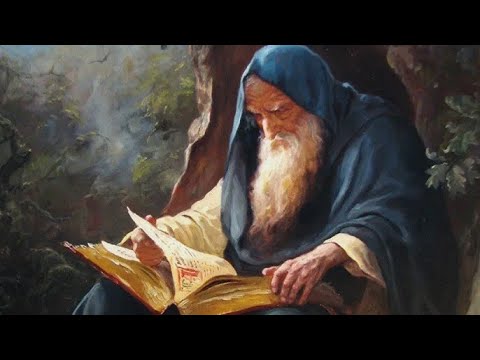
A series based on the book by Norman Vincent Peale, The Power of Positive Thinking. I pray it helps you live a more empowered life.
|
Some art from my Moleskine along with my Hobbes :). Carl Jung on technology, the human psyche, and the drum we forgot how to hear
So I have a confession to make. I love notebooks. Not in a casual, "oh, that's a nice notebook" sort of way. I mean I love them the way some people love vintage cars, which is to say irrationally and at great personal expense. Moleskines especially. There is something about the weight of a good notebook in your hand, the texture of the paper, the way a fresh one sits there looking at you like it knows something is about to happen. And I love the smell of a notebook. Crack open a new Moleskine and breathe in those fresh pages, and you will know what I mean. (If you do not know what I mean, once you try it, you'll know.) I often write in them with a fountain pen, so by the end of a good day my fingers are usually stained with ink or pencil. Ink-stained hands make me feel like I've been down in the depths and come back up carrying something. You do not get that feeling from a keyboard. Nobody has ever come home with Wi-Fi on their fingers. Almost everything I write in my notebooks ends up in my digital calendar too. I time block my days on paper, then dutifully enter the whole thing a second time on a screen. It's completely redundant. Any productivity expert would tell me to pick one and move on. Any productivity expert would be right. I refuse anyway. Because the notebook isn't just about scheduling. It's where my sermon ideas show up half-formed and chaotically thought out. It's where I keep my journal to reflect on what the heck I'm doing with my life. It's where I scribble down my dreams in the morning before I forget. It's where I doodle and let my body speak. Oddly enough, when I block out my day by hand, I don't feel so boxed in. I feel free. The calendar on my phone tells me where I have to be. The notebook reminds me who I am while I'm getting where I have to be. Please don't mistake me for some kind of Luddite. I love technology. I got the iPad the first day it came out and used a Palm Pilot back in the day. I'm a tech nerd (I used to play WoW for those who know). And a good share of my day runs through a screen but somewhere along the way I noticed the screen had started running me a bit more than I liked, and the notebook became my small act of rebellion. A way of keeping a little piece of my life in my own hands. With ink on them. So you can imagine my reaction when I opened my copy of Jung's The Symbolic Life the other day and happened upon a two-page letter titled "The Effect of Technology on the Human Psyche." It felt a little like being caught, like Samuel, I couldn't let it just pass so I read some words written by a Swiss psychiatrist who has been dead since 1961. He also likely never imagined I would have read his, what we would call today, e-mails. Sorry Carl :*( but thank you! If someone rummages through my e-mails in the future, you are welcome for the nuggets of gold but please forgive me if you happen upon my texts, particularly with other ministers and therapists, we're only human. A Letter to Some Engineering Students In September of 1949, the editors of the student magazine at the Federal Polytechnic Institute in Zurich, which is basically the MIT of Switzerland but with better chocolate, wrote to Jung with a simple question: what does technology do to the human soul? Jung's reply runs five short paragraphs (Collected Works 18, paras. 1403 to 1407). He opens by telling the students, more or less, "Great question. Terrible question. Good luck to us both." And then, in less space than it takes our church bulletin to list the week's announcements, he says something I think we desperately need to hear seventy-seven years later, while holding a phone in one hand and chatting with an AI in the other. (Guilty.) The Song We Lost Jung begins with a point we tend to forget. Technology did not arrive from outer space. We made it. It lives inside the human story, not outside of it. Which means there must be something in us that was built to meet it. He finds that something in a surprising place. Most technological work, he says, is the same rhythmic motion repeated over and over. That happens to be the exact shape of the oldest human labor: grinding grain, pulling oars, hauling nets, swinging hammers. But here's the thing. Nobody ever did that work in silence. It always came with a rhythm and a chant. Our ancestors did not merely endure monotony. They sang it. They drummed it. Jung says the person living close to instinct could tolerate an astonishing amount of repetition, even find it fascinating, because the rhythm took them somewhere. With the drum going, the worker might rise into something close to ecstasy, or drift into a pleasant, half-conscious trance, which Jung notes was not so bad either. (Anyone who has ever sat through a long committee meeting knows the second option well.) Either way, the monotony became a doorway. Then Jung asks the question at the heart of the whole letter. What happens when we impose those ancient rhythms on modern people who have lost the ability to go anywhere with them? Here is how I would put it. We kept the work. We lost the song. I spent four years in the Coast Guard, and I can tell you every sailor understands this. There's a reason sea shanties exist, and trust me, it's not because sailors were all frustrated Broadway performers. Try cleaning up for a hundred people after a drug bust, then moving straight on to stripping and waxing the decks. You don't get through that on willpower. You get through it singing like madmen, letting rhythm and instinct carry you past the fatigue. It's how we marched for hours in boot camp, too, singing together in step. Years later, when I joined a protest in support of George Floyd, I felt the same thing. The chants and songs held the whole crowd together and kept us, for the most part, in step. That's how many become one. You need a rhythm bigger than you are. Now consider the rhythmic, repetitive work most of us do today: scrolling, clicking, answering, refreshing, and scrolling some more. Nobody has ever written a shanty about clearing their inbox. We are doing the most ancient kind of labor with none of the ancient medicine. The Fallow Field Jung's diagnosis follows. For modern people, he says, technology creates an imbalance, and that imbalance breeds dissatisfaction, with work and with life itself. It cuts us off from the natural range of what a human being is made to do. A lot of our natural instincts just go unused, like a field nobody bothers to plant. And the result, he says, is that we start to resent work itself. Have you ever finished a day at the computer completely wiped out, even though the heaviest thing you lifted was a coffee mug? Your shoulders and back hurt and you barely moved? That is what Jung is describing. The exhaustion is not from effort. It is from one-sidedness. Most of you has been sitting in the dark all day, like a benchwarmer who never gets called into the game, and it is tired of waiting. His proposed cure is gloriously Swiss. Move the factories out of the cities, work a four-hour day, and spend the rest of your time farming your own land. He even admits this may only work in Switzerland, and not anytime soon. It's hard not to smile. I tried pitching the four-hour day to myself once. My calendar took one look and said, "Are you crazy?" But underneath the charm is a principle I believe with my whole heart: the answer to a one-sided life is not to destroy the side that dominates. That's dualism. That's splitting. It's easy, and it ignores how nuanced reality actually is. So what's the better way? Feed the parts of you that have been starving. The Snake Eating Its Tail The most important move in the letter comes next. On its own terms, Jung says, technology is "neither good nor bad, neither harmful nor harmless" (para. 1406). Whether it serves good or evil depends entirely on the attitude of the person using it. If he had stopped there, that would be the tired old line that "tools are neutral," the kind of thing people say right before buying something they do not need. But Jung doesn't stop there. He adds that this attitude is one "which in turn depends on technology." Read that again, slowly, the way you would read the fine print on a car lease. We are not neutral shoppers standing outside our tools, calmly deciding how to use them. Our tools are shaping the very minds doing the deciding. The attitude that governs our technology is itself being formed by our technology. It is a loop, and we are standing inside it, holding a charger. Many of you know I wear a ring with the ouroboros on it, the serpent swallowing its own tail. It is my personal symbol, and I have loved it since I was a kid, which tells you everything you need to know about what kind of kid I was. In Jung's world the ouroboros is an image of wholeness, the circle that feeds and renews itself. But a circle can turn in two directions. It can be the loop of a life that keeps coming home to its center, or the loop of a life that keeps feeding on itself until there is nothing left to eat. Our relationship with our devices is an ouroboros. The only question is which kind. I think about this the way I think about Cesar Millan (Yes, I watch the Dog Whisperer). A dog that yanks on the leash is not a bad dog. It is acting out a learned pattern because it does not know another way. Cesar does not scold the dog. He calmly breaks the pattern, and then, in that lost little moment when the dog has no idea what to do next, he shows it a new way. We are not bad people for being glued to our phones. We have been trained, and we are acting out the training. The work is to break the pattern and have something better waiting in the gap. Ideally something that does not require a charger. The Engineer on the Couch Jung then turns to the students themselves, the engineers in training. The technologist, he says, has the same problem as the factory worker. He spends his days with mechanical things and risks letting the rest of his mind waste away. Just as a bad diet damages the body over time, an imbalance in the psyche does damage in the long run and has to be compensated. Compensation is one of Jung's great ideas, and I lean on it as an analyst. The psyche is self-correcting. When our conscious life gets too narrow, the unconscious pushes back. It sends us dreams, moods, restlessness, symptoms, and sudden strange fascinations, all tugging us toward whatever we have been ignoring. The soul, it turns out, is a very persistent widow when we ignore her. It does not care whether you have notifications turned off. As Paul noted, the spiritual life is like marriage, and trust me our soul is like a partner you think you can get away with ghosting. It ain't going to happen. Jung says that in his practice he noticed engineers very often developed an interest in philosophy, and he calls this "an uncommonly sound reaction." I love that. The engineer who wakes up at fifty and suddenly cannot stop reading about the meaning of life is not having a crisis. An AI engineer suddenly resigns. Their soul is doing its job. The world may say, "that make no sense," but it does to that person. And then comes my favorite part of the letter. Jung says this is why he always recommended that the Polytechnic keep a faculty of the humanities. Not to force every engineer into a philosophy seminar, but simply to remind the students that such things exist, so they could come back to them later in life if they ever felt the need. What a humble, wise hope. Don't force it. Just leave the door visible. Put up a few signposts, so that when the soul starts aching for the rest of the house, people know where to walk. That was my whole philosophy when I did youth ministry, "make sure they remember this place was cool and not boring." Friends, that's part of what the church is for. I've never believed the church is a courtroom. It's an outpost, an oasis in the middle of a very dry and very fast civilization. We are a humanities department planted in the middle of the machine, with better coffee hour. We keep the old songs. We keep the rhythm of the seasons: Advent and Lent and Easter and that long green stretch of summer with sending off and gathering days. We keep the chant, sometimes quite literally. We're here to remind people that these things exist, so that when their one-sided lives start demanding compensation, and they will, there is a room somewhere on a Sunday morning where people are singing together. A room where people stand and sit and pray side by side, and connect with one another through rituals and rites, creeds and a shared life. A Question Only Experience Can Answer Jung saves his most sobering word for last, and here the jokes stop for a moment. Technology, he says, is no more dangerous than any other development in human consciousness. The real danger is not in the tools we have. It's in what is still waiting to be discovered. Every new discovery will be used for harm as well as for good. Writing just four years after Hiroshima, he notes that we have already come very close to destroying ourselves with the atom bomb. So, he says, we have to ask whether human beings have enough reason to resist the temptation to use these things destructively, or whether our nature will simply sweep us into catastrophe. And then he ends with no comfort at all. It is, he says, "a question which experience alone can answer." I cannot read that sentence in 2026 without thinking about artificial intelligence. Every generation gets its own version of the atom bomb question, and ours may be the question of what we will do with the minds we have built. Jung's framing still holds. The machine is not the danger. The danger is an unconscious human being holding the machine. I have come to believe that most of the harm in this world comes not from malice but from unconsciousness. People are rarely monsters. Mostly we are asleep. And a shadow we have never faced will always find a tool. That's not a technology problem. That's a spiritual problem, and it's now our problem. Which is why I keep saying, to you and to myself, that the most important work any of us can do is our own inner work. The conversation begins and ends in us. Jung's refusal to hand us a tidy answer is, I think, the most honest thing in the letter. We don't know how this ends but we'll find out by living it. We are the experiment... Picking Up the Drum Again So what do we do? I do not think Jung would tell us to throw our phones in the river. I certainly will not. I would only have to go fish mine out to call the church office, and I suspect our sexton has opinions about me wading into the Pomperaug. But I do think he would ask us to refuse one-sidedness. To notice the neglected fields in our own lives and start planting them again. To get our hands dirty, or at least inky. To walk. To make something. To sing while we work, even badly. Especially badly. To pray with our bodies and not only our minds. For me, it looks pretty ordinary. A few minutes of meditation every morning. Twenty pushups and some leg lifts. Half an hour of real reading, the kind with paper. A notebook full of dreams and half-finished sermon ideas. Music while I make my bed and pick up after myself. None of it is heroic. But music, reading, chores, and meditation are how my everyday mind stays on speaking terms with my inner mind. They are my drum. They keep me centered in who I am. And I would ask you to take your own restlessness seriously. The vague dissatisfaction. The sudden hunger for poetry, or silence, music, nature, fellowship, or God, that shows up out of nowhere at forty-seven years old, usually on a Tuesday, staring at the bird feeder in your window when you should be working. Those are not malfunctions. That is your soul trying to restore its balance. That is the psyche remembering the song. The drum has gone quiet in most of our workplaces. But it has not gone quiet in us. The rhythm is still there, underneath all the noise, waiting to be heard. The invitation, as always, is to wake up and listen. And maybe buy a notebook. Smell it first. Trust me. Source: C. G. Jung, "The Effect of Technology on the Human Psyche," in The Symbolic Life: Miscellaneous Writings, Collected Works, vol. 18, trans. R. F. C. Hull (Princeton: Princeton University Press, Bollingen Series), paras. 1403 to 1407. Originally a letter of 14 September 1949 to the editors of the Zürcher Student, published in the November 1949 issue.
0 Comments
Reading the First Chapter of Edward Edinger’s The Creation of Consciousness Introduction Every now and again you read a book that names the thing you have been trying to say for years. For me, one of those books is Edward Edinger’s The Creation of Consciousness: Jung’s Myth for Modern Man. It’s a short read, barely more than a hundred pages, published by Inner City Books in 1984 and gathered from essays Edinger first wrote for the journal Quadrant. Edinger was one of the most important American interpreters of C.G. Jung, an analyst whose earlier book Ego and Archetype offered a new way to understand the inner, sacred life, of human beings. But this is the book where I think any student of Edinger should begin, because in it he doesn't merely explain Jung. He argues that Jung’s life and work mark the birth of a new myth, a new story that the modern person can live out rather than just “go along” with on Sunday. This image is on the cover of the book and I always make sure to take note of a cover. It shows the face of the stone Jung carved by hand at Bollingen, at his tower retreat by the lake. At its center is a small figure, the pupilla, the little person you catch reflected in the pupil of another’s eye, ringed by a Greek line that Jung translated, in which time is a child at play and a small guiding spirit carries a light through the dark toward the dawn. It is an image of the self gazing back at itself, and of consciousness kindled in the darkness. That, in a single carved stone, is the book in symbol form.
I should say a word about why I am writing this at all, because this book has been calling to me for some time now. I have a stack of Edinger on my shelf that I've been saving and waiting to read after all my current studies were done. What draws me to Edinger is that he does for scripture what Jung did for myth and dream. He treats the old stories not as outdated tales to be defended or explained away, but as living symbols, still charged, still able to lay a claim on us, to move and speak to us. He revives their inner life, and the way we see them, and then invites us to join in the story. In an age that has largely forgotten how to read that way, it is less a scholarly method than a more organic, simpler way of approaching scripture, one that becomes psycho-spiritual, that is, it speaks to our inner life and serves to help us see ourselves. In a few weeks I'll also be preaching on this book at a Unitarian church where I'm sometimes invited to teach, and where I let myself wander into subjects I might not take up from my own pulpit. It's a good place for Edinger. His new myth, the one he believes Jung has given us new lenses to see and has brought into our conscious awareness, doesn't compete with the traditions. It reads every living faith as one more expression of the same deep process, from Buddha to Christ, the slow making of consciousness, and so it can be spoken in a room full of seekers from a dozen backgrounds without asking any of them to leave their story at the door. These posts are partly how I think out loud toward that sermon. Across four chapters Edinger traces this new myth from its first statement to its biggest conclusion, moving from the loss of our old myths, through the meaning of consciousness itself, into a reading of Jung’s Answer to Job, and finally to what he calls the transformation of God. I mean to write on each chapter in turn. This first post stays with the first chapter, “The New Myth,” where the ground is laid. It is dense, luminous, and a little dangerous, in the way that only the best theology is.  A Phoenix, Cornelis Troost (Rijksmuseum). The old bird burns so the new one can rise. The Diagnosis: A Mythless Age Edinger opens with a line from Proverbs: “Where there is no vision, the people perish” (Proverbs 29:18). He means it almost clinically. Drawing on both history and anthropology, he argues that a human society cannot survive for long unless its members are held inside a central living myth, a shared story large enough to answer the questions that keep us up at night. Why am I here? What is worth suffering for? What happens when I fail? A living myth does not argue us into answers. That is the opposite of what education means. That is indoctrination, and it does not do for the average person. A real myth (and to be clear, when I say myth I do mean religion) contains us, the way a vessel contains water, so that the deepest members of a culture and the most ordinary ones alike can go about their days without being ambushed at every turn by the meaning of it all. That is the work pastors and theologians should be doing, helping to create meaningful myths, real meaning inside a living religion. His diagnosis of our moment is uncannily accurate. Edinger says that Western culture no longer has a functioning myth. He gives the condition a name the surgeon general himself has gestured at, meaninglessness, which I would simply call mythlessness. When a central myth breaks, he writes, it is like the shattering of a vessel that had been holding a precious essence. The essence spills out and is soaked up by the surrounding, undifferentiated ground. Meaning does not disappear all at once. It drains. You can feel the drain on an ordinary Sunday afternoon, when the errands are done and the phone is in your hand and some quiet part of you asks, is this all there is? Into that vacuum rush the old elemental motives, power and pleasure, along with a low, apocalyptic anxiety that the poets named long before the psychologists did. Edinger reaches for Yeats. “The Second Coming,” written just after the first World War, still reads like a diagnosis: the falcon can no longer hear the falconer, the ceremony of innocence is drowned, and “the centre cannot hold.” The magic circle of the mandala has broken, and the meaning has escaped. Edinger refuses to leave us in the diagnosis. He argues that Jung was the first to formulate the problem of modern life as mythlessness, and that he found it, as he found most of his discoveries, first in himself. There is a famous passage where Jung, in the middle of his own success, asks himself the simple, terrible question of what myth he is actually living by, and honestly answers that he does not know (worth remembering that Jung was a minister’s son and grew up in a parsonage). He reaches, in his own words, a dead end. Edinger’s thesis, the point of the whole book, is that Jung’s private recovery of a myth is not a private matter at all. It is the first appearance of a new collective myth that the rest of us are only beginning to build. He calls Jung an “epochal man,” someone whose life inaugurates an age, whose most personal crises turn out to rhyme uncannily with the crises of the century around him. Which is part of why he resonates with so many, and why his influence has reached so far into Western culture.  Salvador Dalí, Genesis 1:27 (from Biblia Sacra). "So God created man in his own image." The New Myth: The Creation of Consciousness So what is the new myth? Here is the sentence Edinger builds the book on, and the one I highlighted twice: the purpose of human life is the creation of consciousness. Not comfort. Not even salvation as we usually picture it. The making of consciousness itself. Now what the heck does that mean? Edinger knows how abstract that can sound, so he grounds it in a story. He retells Jung’s encounter with Mountain Lake, a Pueblo elder in Taos, who explained that his people rise each day to help their father, the sun, cross the sky, and that they do this not only for themselves but for the whole world. Jung envied the man for having such a genuine and authentic belief. Then, standing later on the Athi Plains in East Africa, watching the great herds move like slow rivers with no human eye upon them, Jung felt with overwhelming force that a world without a witness is a world only half-created. He would later write, in Answer to Job, that “existence is only real when it is conscious to somebody.” It is like that old riddle, if a tree falls in the woods and no one is around to hear it, does it make a sound? The riddle nags at us because we think we know the answer and yet it does not quite satisfy. But it catches the whole problem of existence. And so the human being, in this telling, is a kind of second creator, the one who confers objective existence on a cosmos that would otherwise go on grazing and dying in the profoundest night of non-being, unseen and unknown. That is a staggering thing to be told about your life, that the universe is, in some real sense, waiting on your attention. Which may be why we are only now realizing that attention is the most valuable resource we have.  C.G. Jung (left) and Chief Mountain Lake of the Taos Pueblo (right), whose conversation gave Jung a first glimpse of his new myth. The Union of Opposites, and Why It Feels Like a Cross If the making of consciousness is the point, the next question is how it happens, and Edinger’s answer is the heart of the chapter. Consciousness is the third thing that emerges from a conflict of twoness. Bear with me here, because while I know this can sound abstract, it answers a question a lot of us have quietly wrestled with: what is consciousness, exactly? Consciousness is born when we are caught between the ego as subject and the ego as object, between the self we are proud of and the self we can hardly stand, between two duties that cannot both be honored. Out of that paralyzing collision, held rather than fled, something new is generated. Paul writes about exactly this conflict, how he is at odds with himself, until he finally cries out, “O wretched man that I am!” (Romans 7:24). That passage is the one I resonate with most, because it names something I know by heart. I can be having the best day with my kids and then get upset with them, justifiably even, and a moment later feel horrible about myself. Or I watch insecurity and self-doubt bend my behavior when there is no real reason they should. That gap, that quiet war with yourself, is not a malfunction. Edinger would say it is the exact place where consciousness gets made. Edinger turns for evidence to the strange laboratory of alchemy, and to the dreams of ordinary people, which he reads as telling the same story. He recounts a woman’s dream of descending into an underground chamber where two chemists labor to distill a priceless golden substance, while she and her lover, in the next room, supply the energy for the work through their embrace. The gold, Edinger says, is consciousness itself, and it is born of a union of opposites. The alchemists pictured that union as the marriage of a king and a queen, or of the sun and the moon, the conscious and the unconscious wed at last. And yet, this is the sober note he keeps sounding, the union is more often felt as an agony than an embrace. And this is where we come back to Christianity, because more often than not, Edinger says, the union of opposites is felt as a crucifixion. The cross is itself the joining of two contrary directions, the horizontal and the vertical, and to be nailed to a genuine conflict is not fun. It is a terrible thing to go through. And yet that's real life. Read this way, the Trinity becomes a picture of the whole process. Father and Son, God and man, are opposites that collide on the cross, and the Spirit is the reconciling third who proceeds from that collision. The Paraclete can only come after the Son has died. Consciousness comes as the fruit of the conflict of twoness, which is why Christ could say it was to our advantage that he go away. From there Edinger draws the image he wants us to hold onto: the ego as a vessel, a carrier of consciousness. When the Lord says that Paul is “a chosen vessel unto me, to bear my name” (Acts 9:15), this is what Edinger hears, not a container to be filled and set on a shelf, but a life enlisted to carry something larger than itself. He sets Christ and Buddha side by side, consciousness as agony and consciousness as tranquil bliss, and suggests that together they picture the two faces of what it costs, and what it gives, to be a carrier of meaning in the world. It is what Bonhoeffer called the cost of discipleship, and embracing it, through the practices and rituals of a religion, is how a person actually lives it out. Augustine had already pressed the image to its limit, picturing Christ as a bridegroom who goes out and “came to the marriage bed of the cross,” and there is joined to his beloved forever. The wedding and the crucifixion are the same event, and the language of marriage is pure alchemical symbolism. When the opposites are held and suffered in a human life, that life becomes something like the Holy Grail, the vessel that catches the divine blood, made holy not by any worth of its own but by what it is given to contain. You, me, yes, us, plain ordinary human beings, contradictions and all: we are the cup.  The Knights of the Round Table and the vision of the Holy Grail (French manuscript illumination, c. 1470s). Nothing Is Lost So what about eternal life, and how does the new myth speak to it? The new myth claims that no authentic consciousness won by a person, suffered not blindly, but in living awareness, is ever lost. Each unique experience is deposited as a permanent addition to the collective treasury of the psyche. Edinger calls it a modern and more modest version of the old idea of an immortal soul, and he gathers the ancestors of the thought: the communion of saints, the medieval treasure of merits, the widow’s mite dropped into the temple box, Milton’s image of a good book as “a life beyond life.” In the margins of this chapter I wrote, "your names will be written in the book of life." What you make conscious, at real cost, in the small hours, when no one is watching and nothing seems to come of it, is not spent. It is kept. The 2 a.m. feeding no one will ever thank you for, the patience you found when you had none left, the apology that cost you your pride, none of it evaporates. It is entered into the ledger of the Great Psyche, the Great Spirit. Edinger found old images of this expressed in ancient times. The Egyptians imagined their dead rising to sail among the imperishable stars in the barque of the sun. Paul promised the Corinthians, “we shall all be changed, in a moment, in the twinkling of an eye” (1 Corinthians 15:51-52). A dying man dreamed of uncovering a heavy log hidden in the forest, carving a single disk from it, recording its whole meaning on tape, and giving both to a library so the thing could never be lost. Edinger reads that dream as a picture of the deepest work there is, the slow transformation of wood into word, of raw matter into spirit, deposited somewhere it will keep. Edinger does not stop at a comfortable place, and this is where Jung gets, let us say, innovative. Leaning on Answer to Job, he calls for the very image of God to be enlarged, and here his psychological lens really goes to work. God, in this myth, has awareness at stake too, and needs the human capacity to know Him in order to become fully conscious of Himself. That, Jung suggests, is why God demands acknowledgement more than sacrifice. The divine opposites that Christianity later split into eternal antagonists, Christ and Satan (a split that entered Jewish thought relatively late, under Zoroastrian influence), begin to be reconciled in the vessel of the modern psyche. This is bold, and it is exactly where the book is heading in its later chapters, toward what Edinger frankly calls the transformation of God. There is something exciting here, and something a little threatening. We can all feel that some change needs to happen, but what would it take, and what would it even look like? Sometimes it feels safer to cling to the old idols than to move on to the new, just ask the Israelites, freshly delivered through the Red Sea, already missing Egypt. One more feature deserves naming, especially for those of us in ecumenically minded traditions. Because this myth reads every functioning religion as a living expression of the same process, the making of consciousness, it does not arrive as one more competitor for our allegiance. It tries instead to say more clearly what each tradition already means. Edinger claims for it a genuine right to the word catholic, in the old sense of universal. When enough individuals become carriers of what he calls the consciousness of wholeness, he says, the world itself will become whole. Put plainly, when we are actually building and tending our inner lives, we stop over-managing everyone else’s, and we stop feeding the machine that runs on being obsessed with other people’s outer lives.  The Dreams of a Dying Age
Edinger says something I have only thought and now can say out loud, maybe you've thought it too: that in a time like ours the dreams of ordinary people begin to read like the scriptures of a myth still being written. When a culture’s central story is dying and a new one is struggling to be born, the deep psyche does not stay quiet. It speaks first through individuals, who often have no idea they are dreaming anything more than their own private nightmare. He offers a dream he heard that is hard to forget. A man dreams that he is standing above a ruined New York, the city in rubble, the river overflowing its banks, fires everywhere, and the cause of it all is a race of giants come from the far reaches of space, sitting calmly in the wreckage and eating people by the handful, as casually as the Cyclops ate the crew in the Odyssey. The dreamer is spared, he is told, for a strange reason: he happens to have slightly high blood pressure. He is then made to climb a long and frightening staircase until he stands face to face with the enthroned king and queen of the giants, and only later does he understand that the whole destruction was a kind of wedding feast for the newly united pair. Edinger’s reading of it is where the chapter turns most theological and psychological. To be eaten by giants, he says, is to be swallowed by the great impersonal forces of the psyche, to lose the small separate standpoint that is the whole fragile achievement of being a conscious self. For an individual that can mean breakdown. For a society it means the collective demoralization that follows the loss of a central myth, when, in Yeats’s words, “the best lack all conviction, while the worst are full of passionate intensity.” And the odd detail that saves the dreamer is the one I find most consoling of all. His slightly high blood pressure is not a defect. It means that it is correct, in times like these, to be disturbed. A person perfectly at ease amid all of this would be the one in real danger, lulled and unprepared for the encounter. To be a little alarmed is simply to have an inner alarm that still works. The staircase the dreamer must climb is, in the old alchemical language, a sublimatio, the lifting of a substance from the bottom of the vessel to the top, from being trapped inside an experience to seeing it from a height, under the aspect of eternity. To climb it is to endure the union of opposites rather than be consumed by it, and the union, once endured, turns out to be a wedding. The same imagery of harvest and reaping that runs through the book of Revelation runs through this modern man’s dream, because the mood of our age, as Jung named it, is one of universal destruction and renewal, a metamorphosis of the gods. We are living, he thought, in a kairos, one of those hinge moments when the deep symbols themselves are being recast. There is a gentler vision Edinger sets beside the terrifying one. A woman saw the whole earth covered by a single great tree made of light, its roots fed by an inner sun, lifting itself up out of the broken seeds of countless egos who had at last let the one Self break through. From what she could tell, she said, the Lord himself was the alchemist, and out of all our swarming and suffering and ignorance he was patiently trying the gold. Eight days before he died, Jung spoke of a vision of his own in which much of the world lay in ruins, and then added, simply, “thank God not all of it.” That is about where I land too. Why This Book Matters Now It would be easy to file all of this under the history of ideas, a curiosity from 1984 about a Swiss psychologist. I think that would be a mistake, because Edinger’s diagnosis has only grown truer. We are, if anything, more mythless than we were forty years ago. We have never had more information and never felt more starved for meaning. The old containing stories have thinned to the point where many people no longer even notice they are gone, and into that emptiness rush exactly the forces Edinger predicted: raw power and easy pleasure, distraction and outrage, the elemental motives that take over when the differentiated ones fail. The apocalyptic mood he traced through Yeats and through the dreams of ordinary people is now the background noise of the culture we all dance too. This is also why I find the book more helpful than bleak. Edinger does not treat our unease as a sickness to be medicated away. The dreamer spared by his slightly high blood pressure is, in a way, all of us, told that to feel the wrongness of the age is a sign of health and not of weakness, and that our anxiety, held and reflected upon rather than numbed, is the very thing that can spur us toward the work of becoming conscious. That is a strangely dignifying word to hear in a season of despair. And it matters, for me, because of what it offers the church. Many people I love have walked away from faith because it seemed to offer only rules on one side or easy reassurance on the other, and neither was equal to their actual lives. Edinger points to a third thing, a Christianity that is not a courtroom and not a comfort blanket but an arena for the making of soul. He lets us reimagine the tradition forward, through depth, rather than backward through nostalgia. He does not ask us to abandon our symbols or to cling to them defensively. He asks us to discover what they were carrying all along. In an age that quietly suspects nothing we do finally counts, his central claim, that every scrap of consciousness we win in love is kept and added to the whole, comes very close to good news. The Work of a Tuesday Which brings me back to Jung’s phrase, the one this post is named for. Our purpose, as far as we can discern, he wrote, is “to kindle a light in the darkness of mere being.” That is not a doctrine to assent to. It is a vocation to take up on a Tuesday. Every time we hold a real conflict consciously instead of fleeing it, every time we refuse both to repress the dark thing and to be swallowed by it, and stay in the tension until something genuinely new is born, we are doing the work. And Edinger will not let us imagine that work as tidy. It is cruciform. To bend to the burden of the opposites is, in Jung’s stark phrase, to become “a vessel filled with divine conflict.” This is why I imagine the church as an oasis, an outpost that travelers build in the wild for the ones coming after. The desert of mythlessness is real. Edinger names it. But the answer is not to shame people back into an old vessel that has already cracked. It is to help them become vessels themselves, and to remind them, week after week, that the light they are asked to carry was never theirs to manufacture. It was only ever theirs to bear, and never, in the end, lost. Where It Leads Edinger has one more move, and it is the doorway into his second chapter. Having said that our purpose is the creation of consciousness, he turns and asks what that word even means. The etymology gives the clue. To be conscious is to know with, to see with an other. Consciousness and conscience share a root, and both name a knowing that only happens in a setting of twoness. Consciousness is born the very moment undivided experience is split into a knower and a known, a subject and an object. Its oldest symbol is the mirror, the psyche’s power to step back from the deadly grip of raw experience and see it, rather than only be swept along by it. He finds this, beautifully, in the apocryphal Acts of John, where John cannot bear to watch the crucifixion and flees, and the risen Christ meets him and teaches him to see it symbolically. “Behold thyself in me,” Jesus says. The same power appears in the old story of Perseus, who could not look at Medusa directly without being turned to stone, and could face her only as a reflection in Athena’s shield. To turn chaotic anguish into an image of meaning, to look at the unbearable thing in the mirror rather than head on, is the whole pastoral art. In plain terms, it is the difference between being your anger and noticing, quietly, I am angry right now. That second version gives you a half-inch of room, and almost everything worthwhile happens in that half-inch. It is what we are really doing when we sit with someone in the worst of it and help them find the picture hidden inside the pain. That is the ground of the next post, and the next chapter. The Soul, Symbol, and the Forgotten Transformational Language of the West  When most people hear the word alchemy, they imagine something primitive and strange. A medieval man in a smoky room trying unsuccessfully to turn lead into gold while muttering mysterious phrases over boiling liquids. The subject has been reduced in the modern imagination to either fantasy fiction or pseudoscience sitting somewhere between Merlin, chemistry class, and internet conspiracy theories.
But historically speaking, alchemy was one of the most important symbolic and intellectual traditions in the development of Western civilization. For well over a thousand years, alchemy influenced medicine, philosophy, spirituality, science, psychology, mysticism, and Christianity itself. Physicians studied it. Scientists studied it. Monks copied alchemical texts. Christian thinkers reflected on its symbolism. Even Isaac Newton devoted enormous portions of his life to alchemy and biblical interpretation, writing more on theology and alchemical subjects than he did on physics. That may surprise us because we've inherited a worldview that sharply separates science from spirituality, matter from meaning, and psychology from religion. But the ancient and medieval world did not divide reality that way. Reality itself was experienced symbolically. Nature was not viewed as dead material floating meaninglessly through space. The visible world was believed to reveal invisible truths. Matter and spirit participated in one another. And that is where the story of alchemy truly begins. The origins of alchemy stretch back into the ancient world, especially Egypt. In fact, many scholars believe the word alchemy itself comes from the Arabic al-kīmiyāʾ, which likely traces further back to the Egyptian word Khem, meaning “the black land,” a reference to the fertile soil surrounding the Nile. Egypt became one of the earliest centers for what would later develop into alchemical thought. The city of Alexandria became especially important. Alexandria was one of the great intellectual crossroads of the ancient world, where Greek philosophy, Egyptian religion, Jewish mysticism, early Christianity, Hermetic traditions, and later Islamic scholarship all converged. Ancient people were not obsessed with dividing knowledge into isolated disciplines the way we are today. Philosophy, medicine, spirituality, cosmology, and theology all overlapped. The world was experienced as interconnected and alive with meaning. Alchemy emerged from this symbolic imagination. The earliest alchemists were not simply chemists in the modern sense. They were attempting to understand transformation itself. Metals changing under heat became symbolic mirrors of the soul undergoing refinement. Fire represented purification. Gold represented incorruptibility, wisdom, illumination, or divine wholeness. Lead represented heaviness, fragmentation, unconsciousness, or the unrefined human condition. The furnace symbolized suffering. The alchemical vessel symbolized the contained space where transformation occurs (the ego). Long before modern psychology existed, the alchemists were attempting to describe the mystery of human transformation through symbolic language. This symbolic worldview eventually spread through the Islamic world, where scholars preserved, translated, and expanded Greek and Alexandrian texts after the fall of Rome. Muslim thinkers made major contributions not only to alchemy but also to mathematics, medicine, astronomy, and philosophy. Figures like Jabir ibn Hayyan became foundational in the development of alchemical theory and experimentation. From there, alchemy entered medieval Christian Europe, where it flourished for centuries. And this is important to understand: many alchemists were sincere Christians. They were not attempting to replace Christianity. They were trying to understand transformation through symbolic and sacramental language. For many of them, the alchemical process mirrored sanctification itself. The transformation of metals symbolized the transformation of the soul. One important figure was Paracelsus, the sixteenth-century physician and Christian thinker who revolutionized medicine by insisting that healing involved body and soul together. He rejected purely mechanical understandings of illness and believed spiritual imbalance could manifest physically. Long before psychology formally emerged, Paracelsus understood that human suffering could not be reduced merely to bodily symptoms. Then there was Jakob Böhme, the Christian mystic and shoemaker whose visions and writings profoundly influenced later theology and philosophy. Böhme believed the soul was transformed through struggle, paradox, suffering, and encounter with divine mystery. His writings sound astonishingly psychological at times despite being written in the early seventeenth century. Even Newton himself saw no contradiction between science, theology, and symbolic inquiry. Modern people often imagine Newton as the supreme rational scientist, detached from spirituality, but the historical reality is far more interesting. Newton believed the universe concealed deeper layers of divine order and intelligence. Science, for him, was not opposed to spirituality. It was one path into understanding creation. This symbolic and integrated worldview reached one of its great heights during the Renaissance. The Renaissance fascinated Carl Jung because it represented one of the last major periods in Western history where science, spirituality, art, symbolism, philosophy, and theology still spoke to one another. Figures like Marsilio Ficino and Giovanni Pico della Mirandola attempted to synthesize Christianity, Platonic philosophy, Hermetic symbolism, and emerging scientific inquiry into a unified vision of reality. Jung did not believe humanity should literally return to the Renaissance or abandon modern science. He deeply respected scientific thought. But he believed modern Western consciousness had become dangerously one-sided. We developed extraordinary rational and technological power while severing ourselves from myth, symbol, ritual, mystery, and the inner life of the soul. We became brilliant externally while fragmented internally. Jung believed modern humanity was spiritually uprooted. The symbolic imagination that once helped human beings interpret suffering, meaning, transformation, and transcendence had largely collapsed under modern materialism and hyper-rationalism. Myths became dismissed as childish. Religious symbols became flattened into literalism or abandoned entirely. Yet the unconscious did not disappear simply because modern people stopped believing in symbols. It went underground. And when the symbolic life is ignored, Jung believed it returns in distorted forms: fanaticism, ideology, cultic thinking, mass movements, addiction, compulsive consumerism, and collective psychological fragmentation. That insight feels almost prophetic now. We live in a civilization overflowing with information and starving for wisdom. We know how to optimize productivity but often do not know how to suffer meaningfully, love deeply, or encounter mystery without immediately trying to explain it away. We have become materially connected and spiritually exhausted. This is one reason Jung became fascinated with alchemy later in life. He realized the alchemists had unconsciously mapped psychological transformation centuries before modern psychology existed. The strange symbolic images found in alchemical texts mirrored the same patterns Jung encountered in dreams, myths, religion, and psychoanalysis. The alchemists spoke of death, rebirth, purification, shadow, dissolution, union, and transformation because these are universal human experiences. Jung eventually said he regretted not studying alchemy earlier because it provided the missing symbolic bridge between ancient religion and modern psychology that Western civilization had lost. And honestly, I think modern Christianity desperately needs that bridge again. The Bible itself speaks symbolically from beginning to end. The problem is not that Scripture lacks symbolic depth. The problem is that modern people often no longer know how to read symbolic language. Water becomes rebirth. Fire becomes purification. Bread becomes divine life. Blindness becomes spiritual ignorance. Light becomes consciousness. The desert becomes transformation. Death becomes resurrection. The Christian story itself unfolds like an alchemical drama. Humanity begins in unconscious unity before exile, suffering, shame, labor, and division emerge. Abraham leaves certainty behind and journeys into the unknown. Jacob wrestles through the night and emerges wounded yet transformed. Moses encounters divine fire in the wilderness. Jonah descends into darkness before returning changed. Ezekiel watches dry bones come alive. Paul undergoes blindness before deeper sight. Again and again, transformation occurs through descent, suffering, confrontation, surrender, and rebirth. Even sanctification begins to resemble the alchemical process of refinement through fire. Gold appears throughout Scripture as a symbol of purification and incorruptibility. Malachi describes God as a refiner’s fire. First Peter speaks of faith being refined like gold tested in flame. Paul writes in First Corinthians that each person’s work will pass through fire to reveal its true substance. And perhaps nowhere does this symbolic language become more powerful than in the Transfiguration of Jesus. The Transfiguration is one of the most mysterious moments in the New Testament. Jesus ascends the mountain with Peter, James, and John. Suddenly his appearance changes. His face shines with light. His garments become dazzling white. Moses and Elijah appear beside him while the disciples stand overwhelmed with awe and fear. Modern readers often rush immediately to literal questions, but perhaps the deeper question is symbolic: what is being revealed? The Transfiguration reveals Christ in his whole form. Not merely the ordinary carpenter from Nazareth. Not merely the historical teacher walking dusty roads through Galilee. For one brief moment, the veil drops and the hidden glory within ordinary humanity becomes visible. Matter becomes radiant with spirit. The human form becomes transparent to divine light. This is alchemical imagery. The hidden gold shines through the lead of ordinary existence. And importantly, Jesus does not remain on the mountain. He descends again into ordinary human life. The goal is not escape from the world. The goal is transfiguration within the world. That may be one of the deepest truths Christianity offers. “The Word became flesh.” Spirit entering matter. The eternal entering time. The invisible becoming visible. This is why I believe the soul must return to the center of Christianity. Not ideology. Not tribal certainty. Not performative religion. The soul. The living center of human experience where suffering, memory, love, shadow, consciousness, fear, longing, imagination, and divine encounter all converge. In this understanding, life itself becomes the alchemical vessel. Every grief, every failure, every act of forgiveness, every confrontation with ego participates in shaping the soul. Human beings are not static creatures. We are unfinished. We are being refined through experience. Eastern Christianity called this theosis, participation in divine life. Jung called it individuation. Alchemy symbolized it as the transformation of lead into gold. Different symbolic languages orbiting the same mystery. And perhaps that mystery is this: That beneath all the ordinary pressures, losses, sufferings, and transformations of human life, the soul itself is slowly moving toward transfiguration...to it's Self. Bibliography & Further Reading
Alchemical and Hermetic Sources
Christian Mysticism and Theology
Gnostic and Early Christian Texts
Philosophy, Symbolism, and Myth
Historical and Scholarly Studies on Alchemy
A reflection on the symbolic life
The other day I came across a post about Nikola Tesla. It was one of those internet posts filled with diagrams, cosmic claims, and quotes about energy and vibration. Some of these posts exaggerate Tesla’s ideas. Some drift into speculation. Yet something about it caught my attention immediately. It resonated. I did not stop scrolling because I believed Tesla had secretly solved the mystery of the universe. What caught me was the language itself. Tesla once said something that has been shared across the internet for years: “If you want to find the secrets of the universe, think in terms of energy, frequency, and vibration.” Whether Tesla meant that as strict physics or poetic intuition is debated. But the idea itself is powerful. It suggests that beneath the surface of things there are patterns and rhythms moving through the world. And the more I thought about it, the more it struck me that this idea of vibration and resonance is not only a principle in physics. It is also a way of describing how the symbolic life works. When something resonates, we follow it. The Soul Recognizes Patterns Human beings constantly encounter information. Thousands of images, stories, and ideas pass through our minds every day. Most of them barely register. They pass through like wind through leaves. But occasionally something stops us. A line in a book. A piece of music. A conversation. A work of art. A dream. A strange diagram about Nikola Tesla. Something inside us pauses. The Swiss psychologist Carl Jung spent much of his life trying to understand why this happens. Jung believed the human psyche is not random. It has deep structures that shape how we perceive meaning. He called these structures archetypes. Archetypes are not learned from culture alone. They appear again and again across civilizations. They shape the images we respond to and the stories we tell. The hero. The wise guide. The divine child. The sacred tree. The journey into darkness and return into light. When a symbol touches one of these deep patterns, the psyche responds instantly. Jung described this experience in many ways, but one of his most insightful statements appears in Man and His Symbols: “Symbols are natural attempts to reconcile and reunite opposites within the psyche.” A symbol carries energy because it connects different levels of our experience. It links thought, emotion, and imagination. When that connection happens, the soul vibrates. Resonance in the Physical World In physics, resonance occurs when a system encounters the frequency that matches its natural structure. When the frequencies align, the response becomes powerful. A singer can shatter a glass by matching the pitch at which the glass vibrates. A bridge can sway violently when a bunch of footsteps matches its structural rhythm. The energy being applied may not be enormous. What matters is alignment. Tesla understood this principle deeply. Much of his work involved studying how electrical systems behave when frequencies match. He believed that resonance was one of the most important principles in nature. Electrical currents, magnetic fields, and radio waves all behave according to rhythmic patterns. Tesla suspected that the entire universe might operate through similar structures. His life was devoted to studying energy moving through systems of vibration. Resonance in the Human Psyche Jung discovered that something remarkably similar happens in the inner world. When a symbol matches the deep structure of the psyche, it produces a psychological response that can be surprisingly strong. Jung described this as an activation of archetypal energy. He once wrote in The Archetypes and the Collective Unconscious: “The archetype is a tendency to form such representations of a motif — representations that can vary greatly in detail without losing their basic pattern.” In other words, the outer symbol changes, but the inner pattern remains the same. This explains why certain images appear throughout human history. The tree of life appears in ancient myths, biblical literature, and modern dreams. The journey through darkness and into transformation appears in stories from every culture. These symbols resonate because they correspond to something already present inside the psyche. The outer symbol and the inner pattern meet and when that happens, meaning emerges. The Strange Power of Jesus’ Teaching This idea of resonance also helps us understand something remarkable about the teaching of Jesus. Jesus did not speak primarily in abstract philosophical language. He spoke through images that resonate with the deepest experiences of human life. Seeds growing in soil. Hidden treasure buried in a field. A shepherd searching for a lost sheep. A father running to embrace a prodigal son. These stories are simple. Yet they have echoed through two thousand years of human history. Why? Because they resonate. They speak directly to the symbolic structure of the human soul. Jesus understood that truth often travels most powerfully through symbol. His parables are not merely moral lessons. They are symbolic maps of transformation. The listener hears a story about agriculture or family life, but something deeper begins to stir beneath the surface. The soul recognizes the pattern. The Logos Beneath Reality The Gospel of John begins with a statement that remains one of the most profound descriptions of reality ever written: “In the beginning was the Word, and the Word was with God, and the Word was God.” — John 1:1 The Greek word used here is Logos. It means more than speech. It refers to the ordering principle through which the universe takes shape. The Logos is the pattern that brings form out of chaos. Later in the passage we read: “The Word became flesh and dwelt among us.” — John 1:14 This is a shocking claim. It suggests that the deeper pattern underlying reality itself took human form in the life of Jesus. If that is true, then the reason Jesus’ words resonate so deeply is not accidental. They resonate because they align with the deepest structure of reality. His teaching vibrates at the frequency of the Logos. The Kingdom Within Jesus often spoke about the kingdom of God in ways that confused his listeners. People expected a political revolution or an external transformation of society. Instead Jesus pointed inward. In Luke’s Gospel he says: “The kingdom of God is within you.” — Luke 17:21 At first glance that statement sounds mysterious. But through the lens of resonance it begins to make sense. The kingdom is not simply a place. It is a pattern of life aligned with the deeper order of reality. When the soul comes into harmony with that pattern, something changes. The early Christians described this transformation as new birth. Paul spoke of Christ being formed within the believer. In Colossians we read: “Christ in you, the hope of glory.” — Colossians 1:27 In other words, the resonance of Christ is not only something we hear externally. It becomes something that awakens internally. Paying Attention to What Moves Us Living symbolically means paying attention to what resonates. Most of the noise of modern life is just that...noise. News cycles, endless scrolling, and constant distraction can drown out the quieter movements of meaning. Yet every once in a while something breaks through. The symbolic life begins when we stop dismissing these moments and instead ask a simple question. Why did this speak to me? Often the answer reveals something about our current stage in life. Sometimes it exposes a question we have been carrying unconsciously. Sometimes it points toward a new direction. The symbol becomes a compass. Hearing the Hidden Symphony Tesla listened for patterns of energy in the physical universe. Jung listened for patterns in the human psyche. Jesus invited people to align their lives with the deeper order of the kingdom of God. Each of them, in their own way, was listening for the same thing. A deeper harmony. Perhaps the universe is not merely a machine. Perhaps it is closer to a symphony. Beneath the surface noise of everyday life there may be rhythms and patterns holding everything together. And when we encounter truth, beauty, or meaning that resonates with the deepest part of our soul, it feels as if we briefly hear a note from that larger music. The symbolic life is simply the practice of listening. Tesla listened for patterns of energy in the physical universe.Jung listened for patterns in the human psyche. Jesus invited people to align their lives with the deeper order of the kingdom of God. Each of them, in their own way, was listening for the same thing. A deeper harmony. Perhaps the universe is not merely a machine. Perhaps it is closer to a symphony. Beneath the surface noise of everyday life there may be rhythms and patterns holding everything together. And when we encounter truth, beauty, or meaning that resonates with the deepest part of our soul, it feels as if we briefly hear a note from that larger music. The symbolic life is simply the practice of learning to listen. Listening carefully enough to notice when something vibrates with meaning. Listening long enough to let that meaning unfold. And having the courage to follow the vibration wherever it leads. How Scripture and Carl Jung Describe the Same Inner Powers Using Different Languages
Most people think of freedom as choice. The Bible, psychology, and ordinary experience suggest something far more unsettling: much of what we do is decided before we decide. Anyone who has felt anxiety arrive without invitation, anger surge before reflection, or desire override judgment knows this intimately. We often live as though we are in charge, while quietly being carried along by forces that feel both internal and strangely foreign. The question is not whether these forces exist. The question is what happens when they rule unconsciously. Ancient Christianity had a name for such forces. Carl Jung gave them another. Scripture’s language of “powers” is already psychological When the apostle Paul describes the human struggle, he rarely frames it as a simple moral failure. Instead, he uses the language of domination: “For our struggle is not against flesh and blood, but against the rulers, against the authorities, against the powers of this present darkness” (Ephesians 6:12). Modern readers often hear this as cosmic mythology. But Paul consistently brings the struggle inside the human person. In Romans, he describes an inner division that feels painfully modern: “I do not understand my own actions. For I do not do what I want, but I do the very thing I hate” (Romans 7:15). This is not demonology. This is phenomenology. Paul is describing a will that is not sovereign, a self that is acted upon by something deeper than conscious intention. Jesus speaks even more bluntly: “Everyone who commits sin is a slave to sin” (John 8:34). Slavery here is not about punishment. It is about loss of inner freedom. About being governed rather than governing. Carl Jung’s psychological reframing of the problem Carl Jung enters this conversation not to dismiss religious language, but to translate it. In The Archetypes and the Collective Unconscious, Jung argues that the psyche is not a single, unified subject. It is a living system composed of autonomous patterns of energy he calls archetypes. Archetypes are not ideas we invent. They are structures of instinct and meaning that pre-exist individual consciousness and shape perception, emotion, and behavior (Jung, CW 9i, paras. 3–22). Jung writes: “The psyche is a self-regulating system that maintains its equilibrium just as the body does” (CW 9i, para. 330). The problem arises when parts of this system operate outside awareness. When that happens, they do not assist the ego. They govern it. And... this is where Jung begins to sound uncannily close to ancient Christian mysticism. When instincts become rulers rather than servants Instincts are not the enemy. Jung is explicit about this. Hunger preserves life. Aggression establishes boundaries. Sexuality binds us to vitality. Belonging keeps us human. But when instincts are unconscious, they do not present themselves as options. They present themselves as necessities. Jung warns that unconscious psychic contents behave as though they have agency of their own: “Complexes behave like independent beings” (CW 8, para. 253). This is a crucial insight. An unconscious instinct does not feel like “part of me.” It feels like something that happens to me. That is precisely how the Gnostic tradition understood the archons. Archons as a symbolic description of unconscious rule In early Christian mystical thought, archons were not merely evil spirits. They were administrators of a closed system. Powers that maintained order through habit, fear, imitation, and unconscious compliance. Their power lay not in violence, but in inevitability. Their message was always the same: “This is how things are. You have no alternative.” An unconscious instinct speaks in the same voice: Anxiety says, “You must worry.” Shame says, “You are already condemned.” Rage says, “This reaction is justified.” Desire says, “You will not survive without this.” These forces do not argue. They command. Jung does not use the word archon, but he describes the same psychic phenomenon: “So long as the unconscious is not made conscious, it will direct your life and you will call it fate” (a summary statement consistent with Jung’s core teaching, CW 8 and CW 9i). What ancient Christians mythologized as cosmic rulers, Jung locates within the psyche. Not as fantasy. As real lived experience. Jesus and Jung agree on the method of liberation Jesus does not tell people to destroy their instincts or escape the world. He tells them to see. “The eye is the lamp of the body. If your eye is sound, your whole body will be full of light” (Matthew 6:22). Light here is not moral purity. It is conscious awareness. Jung makes the same point psychologically. Healing does not come from repression. It comes from integration. “The withdrawal of projections is a painful process, but it restores to the individual those contents which he has lost” (CW 9i, para. 507). What religion calls repentance, Jung calls the withdrawal of projection. Both describe the same movement: reclaiming inner authority from unconscious powers. “The Kingdom of God is within you” Jesus delivers one of the most psychologically radical statements in Scripture: “The kingdom of God is within you” (Luke 17:21). If the kingdom is within, then the battlefield is also within. Paul echoes this interior focus when he urges transformation not through conformity, but through perception: “Be transformed by the renewing of your mind” (Romans 12:2). Renewal here does not mean learning better rules. It means re-ordering the inner world so that the ego is no longer ruled by unconscious forces. Jung calls this process individuation. Individuation as the dethroning of inner tyrants Individuation is not self-improvement. It is not becoming “better.” It is becoming more conscious and more whole. As awareness expands:
The archon is not destroyed. The relationship changes. Jung writes: “The goal of individuation is nothing less than to divest the self of the false wrappings of the persona on the one hand, and of the suggestive power of primordial images on the other” (CW 7, para. 269). In biblical language, this is freedom. “Where the Spirit of the Lord is, there is freedom” (2 Corinthians 3:17). Spirit here is not abstraction. It is conscious, integrated life. What this means for ordinary people This is not theoretical psychology. It shows up when:
This is the difference between being ruled and being alive. In plain language, Jung is saying something remarkably close to this: Unconscious instincts rule the psyche the way archons rule a world. And the gospel response is not escape, suppression, or moral panic. It is awakening. Seeing clearly. Living deliberately. Allowing what once ruled us to become what now serves life. That is not bad news. It is Good News. You can't have good news without bad news first can you? And that my friends, that is the quiet, demanding, deeply hopeful work of freedom. "I have come to set the captives free." -Jesus Bibliography The Holy Bible, New Revised Standard Version. Ephesians 6:12; Romans 7:15–19; Romans 12:2; Matthew 6:22; Luke 17:21; John 8:34; 2 Corinthians 3:17. Jung, C. G. The Archetypes and the Collective Unconscious. Collected Works, Vol. 9, Part 1. Princeton University Press, 1959. Jung, C. G. The Structure and Dynamics of the Psyche. Collected Works, Vol. 8. Princeton University Press, 1960. Jung, C. G. Two Essays on Analytical Psychology. Collected Works, Vol. 7. Princeton University Press, 1953. I’m writing this for anyone who has been gently informed by someone they love that they can be… a lot.
For anyone whose spouse or partner has tried to explain what it’s like to live with them and used phrases like your mind never stops, can we not analyze this right now, or can we just watch the show. I know. I am that person. Not because I think I’m especially clever, but because everything comes at me all at once. Ideas, emotions, intuition, responsibility, meaning. My mind doesn’t line things up neatly and ask them to wait their turn. It’s more like a crowd all talking at once, convinced their point is urgent. From the inside, it feels overwhelming. From the outside, it can feel exhausting. Both can be true. This reflection started when my wife was describing, kindly and honestly, what it’s like to live with me. Not as an accusation. Not as a complaint. Just a naming. How my attention widens instead of narrowing. How a small moment can suddenly turn into a deep dive. How I’m present, but also clearly processing ten other things. As she spoke, I felt something surprisingly relieving. Yes. That’s me. And no, I’m not doing it on purpose. Around the same time, in one of those doomscrolling sessions that feel informative right up until they feel awful, I kept seeing the word polymath. Usually in memes. Usually reduced to “person who knows lots of stuff.” The word stuck, not because it flattered me, but because it felt incomplete. Like it was pointing at something real without naming the cost of it. Then another name surfaced, uninvited but welcome: Theodore Roosevelt. Roosevelt has been a hero of mine for years. Not because he was gentle or easy. He wasn’t. He was intense, driven, and frankly exhausting. But he was alive. He read constantly, wrote history, governed, explored, boxed, hunted, and thought seriously about courage and responsibility. Roosevelt didn’t seem interested in shrinking himself to make life simpler. He believed a full human life required engaging many dimensions at once. That’s when it clicked. This isn’t about intelligence. It’s about how some people are structured inside, and what that structure gives them, and what it costs them and the people who love them. If any of this already feels familiar, this post is probably for you. Jung’s Personality No. 1 and Personality No. 2 Long before this showed up online, Carl Jung gave language to it. In Memories, Dreams, Reflections, Jung described living with two inner personalities, which he called Personality No. 1 and Personality No. 2. Personality No. 1 is the everyday self. It knows the schedule. It adapts. It shows up. It handles responsibility. It keeps life running. Personality No. 2 feels different. Older. Quieter. Less impressed by productivity. More interested in meaning. It notices symbols, intuition, dreams, and the deeper currents beneath ordinary life. Jung didn’t see this as a problem to be fixed. He believed suffering came when one of these tried to silence the other. When Personality No. 1 dominates completely, life can become efficient but hollow. When Personality No. 2 takes over completely, life can become overwhelming, inflated, or unlivable for others. Some people live with both awake at the same time. And when that happens, one way of thinking is never enough. One discipline can’t hold it. One identity feels too small. So the mind moves. Quickly. Often too quickly. That movement is sometimes called polymathy. But that word alone doesn’t explain where it often begins. Where this often starts, and why it’s tiring For many people, this wide awareness doesn’t begin as a gift. It begins as adaptation. Firstborn children, or children who took on emotional responsibility too early, often learned to read the room before they learned to rest in it. They tracked moods. Anticipated problems. Adjusted themselves to keep things stable. They became intuitive because they had to. When the environment is unpredictable, the psyche widens. It learns to hold many things at once because narrowing would feel unsafe. That habit doesn’t magically turn off in adulthood. It matures. What once was scanning for danger becomes scanning for meaning. What once was vigilance becomes curiosity, synthesis, leadership, and insight. It also becomes exhaustion. If you live this way, you may feel like you’re always “on.” Always processing. Always connecting. Everything feels related, which also means everything feels urgent. And when that spills into relationships, it can be a lot. You’re not broken. But you do need care. Intuition: a blessing and a burden Intuition sits at the center of all this. It lets you see patterns quickly. Sense what’s coming. Make connections others haven’t noticed yet. It can feel like a superpower. It can also consume you. When intuition isn’t contained, it runs the show. Every headline feels personal. Every conflict feels symbolic. Doomscrolling becomes a way to keep feeding a nervous system that doesn’t know how to slow down. Silence feels uncomfortable. Rest feels irresponsible. Harnessed well, intuition becomes discernment. It learns restraint. Timing. Humility. It learns that not every insight needs to be shared, and not every connection needs to be followed. That difference is everything. Parenting, sensory seeking, and recognition This part is personal, and I share it because I suspect some of you will recognize it. My son has severe autism. He is a sensory seeker. His nervous system takes in the world loudly and vividly, all at once. Sound, light, texture, movement. There is very little filtering. Sometimes I wonder if part of me resonates with that. Not in the same clinical way, but in the same direction. A shared intensity. A shared tendency to take in too much, too quickly, too fully. I don’t believe I cause his disability. I don’t believe I make it worse. I think I recognize something familiar. Some nervous systems sample lightly. Others drink deeply. My son’s autism means his sensory gates work differently. Mine are different in another way. But there’s a rhyme there. A shared pull toward the whole world at once, or at least the wish that we could handle it. Love amplifies this. When you are deeply attuned to your child, your nervous system often runs alongside theirs. You feel their overwhelm in your body. That’s not failure. That’s connection. The task, for both of us, is not suppression. It’s containment. Pacing the intake. Learning rhythm. Engagement followed by rest. Exposure followed by safety. For him, that looks like structure, support, and skilled care. For me, it looks like limits, therapy, prayer, sleep, and learning when not to take everything in. That’s not weakness. That’s stewardship. Why mental health matters, especially for people like this This is where faith gets real. Highly intuitive, wide-ranging people are especially prone to confusing exhaustion with faithfulness. We sense needs everywhere. We feel responsible. We mistake constant engagement for devotion. But mental health is not optional for Christians. It’s part of our witness. C. S. Lewis understood this clearly. In The Screwtape Letters, he shows how spiritual distortion often works through fatigue, imbalance, and neglect of ordinary human limits. When we’re depleted, discernment weakens. Love becomes reactive. Faith becomes brittle. We are called to be ambassadors, not examples of burnout. If you recognize yourself in this post, tending to your mental health is not self-indulgence. It’s responsibility. Therapy. Prayer that grounds rather than excites. Limits on information. Sleep. Silence. Learning when not to interpret everything. These are not distractions from calling. They are what make calling sustainable. Why I’m really writing this I’m writing this for anyone who feels seen and slightly exposed reading it. For anyone who has wondered if their wide mind is a flaw. For anyone who worries they’re too much. For anyone who feels both gifted and tired. Polymathy, intuition, wide awareness. These aren’t virtues by themselves. They’re capacities. And capacities can either consume us or serve love. The goal isn’t to become less. It’s to become contained. To let range serve relationship. To let intuition serve wisdom. To let knowledge bow to love. One soul. Many ways of knowing. And the slow, hopeful work of learning how to live that way without losing ourselves, exhausting the people we love, or drowning in a world that is already very loud. If this felt like it was written for you, it probably was. TLDR: Christianity is not dying. It's remembering something it forgot. From the beginning, faith was never meant to be only believed. It was meant to be lived, experienced, and undergone from the inside out. The earliest Christians understood salvation as inner transformation, healing, and awakening, not simply a correct doctrine or future reward. What later centuries labeled “Gnosticism” was not a rival religion, but a diverse set of early Christian voices trying to protect this interior, experiential path. Religious innovation is not betrayal. It's how faith has always moved forward. Abram left home without a map. Moses argued with God. Jesus redefined holiness. Paul reimagined belonging. Every one of them carried the tradition forward by responding to lived experience rather than freezing faith in place. Depth psychology helps us recover the language for this inner journey. Jung and Edinger show that Christian symbols point to real processes in the soul. When those symbols are ignored or flattened, they do not disappear. They go unconscious and return as anxiety, shame, and spiritual disintegration. What's needed now is not a new religion, but a reorientation. A Christianity that takes the inner life seriously. A faith that heals rather than fragments. A path of wholeness for ordinary people living real lives. This isn't Christianity abandoned. It's Christianity remembered.  Why Religious Innovation Is Not a Betrayal but a Birthright
There comes a moment in every living tradition when it must decide whether it will preserve itself or tell the truth. When faith becomes more concerned with continuity than vitality, with correctness than consciousness, something essential begins to wither. The forms remain. The buildings stand. The language still sounds familiar. But the soul quietly slips out the side door. I don't believe Christianity is dying. I believe it's asking to be reimagined. Not in the sense of being modernized, rebranded, or made more palatable, but reimagined in the way Scripture itself imagines God again and again. From the ground up. From the inside out. Through lived encounter rather than inherited assumption. As Michael A. Williams argues in Rethinking Gnosticism, the early Christian world was not a tidy landscape of settled doctrine and clear boundaries. It was a ferment. A lab. A community of seekers wrestling with experience that was too large, too destabilizing, too alive to be contained by a single explanatory frame (the alchemical language is intentional 😉). What later centuries would label “Gnosticism” wasn't a unified religion, nor a rival church, but a family resemblance of early Christian interpretations centered on transformation rather than mere belief. That distinction matters more now than ever. Innovation Did Not Begin with Us. It Began with Abram. Cause if religious innovation sounds dangerous, it's only because we have been catechized into thinking that faith means preservation rather than response. The biblical story tells a very different truth. Scripture doesn't begin with doctrine. It begins with disruption. God does not hand Abram a theology. God gives him a summons. Leave your country. Leave your people. Leave your father’s house. Walk toward a future you cannot yet imagine. Abraham (ironically "ham" is later added to his name to mark his transformation) does not inherit a finished religion. He becomes the bearer of a new one by trusting an inner call that breaks with everything familiar. That pattern never disappears. Moses innovates Israel away from Egypt’s gods. The prophets innovate covenant away from sacrifice. Jesus innovates holiness away from purity systems. Paul innovates belonging away from ethnicity. Religious history doesn't move forward by repetition alone. It moves forward by faithful rupture. Getting nailed to the cross and coming back to life again and again, fresh and filled with life; a new creation. Innovation is not the enemy of tradition. It's how tradition stays alive. The Real Crisis Is Not Belief. It Is Orientation. What most people experience today as a crisis of Christianity is not primarily theological. It's psychological and spiritual. We've oriented the faith outward at the expense of the inner life. Salvation became something that happens to us rather than within us. Morality replaced meaning. Correct belief replaced transformation. Heaven became a destination instead of a state of wholeness. The result is a Christianity that speaks constantly about love while quietly generating anxiety, shame, and fragmentation in the souls of sincere people. This is not because Christianity is false. It's because it has lost contact with its original depth. When Jesus speaks of blindness and sight, death and rebirth, light and darkness, he's not offering metaphors for later dogmatic systems. He's describing states of consciousness. “The kingdom of God is within you” is not poetic garnish. It's the whole claim (see Matt 5:48 in the original greek). Early Christianity Was an Inner Path Before It Was an Institution The discovery of the Nag Hammadi texts in 1945 did not invent an alternative Christianity. It revealed what had been hidden in plain sight. These writings show that many early Christians understood salvation as awakening, healing, and inner integration. They assumed that the human problem was not simply moral failure, but forgetfulness. A loss of connection to the divine image within. This is why knowledge, gnosis, was not information but recognition. Not secret facts, but remembered truth. To know God was to become whole. As Elaine Pagels demonstrates in The Gnostic Gospels, the debates that shaped early Christianity weren't just about authority and doctrine, but also about where divine authority resides. Is it mediated exclusively through hierarchy, or does it also arise through lived experience of the Spirit? History tells us which answer won. Psychology tells us what it cost. Depth Psychology Did Not Undermine Christianity. It Gave It Language Again. This is where depth psychology becomes indispensable. Not as a replacement for theology, but as its long-lost interpreter. Dr. Carl Jung didn't reduce religion to psychology. He demonstrated that religion is the psyche encountering the transcendent through symbol. Myth, ritual, and doctrine are the psyche’s way of speaking about encounters too powerful for literal speech. Edward F. Edinger carried this insight directly into Christian terrain, showing that Christ functions psychologically as the symbol of the Self, the organizing center of the psyche. The drama of Scripture mirrors the drama of individuation. Ego inflation. Alienation. Suffering. Death. Rebirth into a larger wholeness. When this inner process is ignored, religion becomes moralistic or oppressive. When it's honored, religion becomes healing. Jung warned that when symbols are no longer lived, they do not disappear. They go unconscious. And what goes unconscious does not go away. It returns as symptom, projection, or fanaticism. Recovering the Inner Map Without Romanticizing the Past The goal is not to resurrect “Gnosticism” as a system, nor to romanticize early Christianity. The goal is to recover what those early interpreters were trying to protect. An experiential, soul-centered path that takes the inner life seriously. This requires translation. Ancient symbols must be rendered in contemporary language without being flattened. The archons of myth are not cosmic villains hovering above us. They are inner tyrannies that rule from within. Fear that masquerades as prudence. Shame that pretends to be morality. Compulsion that dresses itself up as obedience. False authority that convinces us we are less than we are. Salvation, in this light, is not escape from the world. It's liberation from the false self that keeps us trapped within it. This is Christianity for ordinary people. People raising children. Paying bills. Managing anxiety. Carrying grief. Longing for meaning without having the vocabulary for it. They don't need footnotes to survive. They need a faith that can make sense of their inner worlds without fear. A Final Word The future of Christianity will not be secured by louder certainty or tighter boundaries. It will be carried by those willing to take the inner life seriously, to trust experience without idolizing it, and to let ancient symbols breathe again in modern souls. The task before us is not to defend Christianity, but to let it become what it has always been. A path of awakening. A practice of healing. A journey toward wholeness. Not for the few. For the many. Bibliography Edinger, Edward F. Ego and Archetype: Individuation and the Religious Function of the Psyche. Boston: Shambhala, 1972. Jung, Carl G. The Archetypes and the Collective Unconscious. Collected Works, Vol. 9, Part I. Princeton: Princeton University Press, 1968. Jung, Carl G. Aion: Researches into the Phenomenology of the Self. Collected Works, Vol. 9, Part II. Princeton: Princeton University Press, 1959. Pagels, Elaine. The Gnostic Gospels. New York: Random House, 1979. Williams, Michael A. Rethinking “Gnosticism”: An Argument for Dismantling a Dubious Category. Princeton: Princeton University Press, 1996. The Holy Bible, NRSV. TLDR: The Father archetype represents the deep ordering principle of life: authority that gives structure, meaning, and continuity. When distorted, it becomes either tyranny or absence. Psychological maturity requires the ego to relate rightly to this center, not identify with it or reject it.
Jesus embodies this maturity. He does not seize authority but serves it. His sonship means living from alignment with the Father rather than ego power, which redeems authority into service, responsibility, and trust. The cross shows fidelity to this order, and the resurrection confirms that life aligned with the Father archetype endures. To serve the Father today is to become grounded, trustworthy, and life-giving rather than controlling or absent. Introduction: The Crisis of the Father We live in an age that mistrusts the Father. Authority is suspect, structure feels oppressive, and hierarchy is often equated with harm. At the same time, there is widespread longing for containment, stability, and trustworthy leadership. This paradox reveals not a cultural contradiction, but a psychic wound. The Father archetype has not disappeared. It has become distorted. Depth psychology teaches that when an archetype is repressed, it does not vanish. It returns unconsciously, often in destructive forms. Tyranny and chaos are not opposites. They are siblings born of the same unresolved Father complex. Either authority dominates life, or life collapses without authority. Christian theology places the Father at the center of its symbolic universe. Analytical psychology helps us understand why this matters. The Father archetype is not primarily about power. It is about order that serves life. In this essay, I argue that Jesus Christ embodies the redemption of the Father archetype by becoming its servant rather than its usurper. Drawing on the work of Carl Jung and Edward Edinger, this essay explores how Fatherhood, authority, obedience, and responsibility are transformed when the ego is rightly related to the archetypal center. The Father Archetype as Ordering Principle In Jungian psychology, the Father archetype represents lawfulness, structure, continuity, and origin. It is the principle that establishes boundaries and makes development possible over time. Without it, psychic life becomes chaotic, fragmented, and short-sighted. With it, life gains direction, meaning, and coherence. Importantly, the Father archetype is not identical with one’s personal father. Personal fathers mediate the archetype imperfectly. When that mediation fails, the archetype itself is often rejected. Yet the psyche still requires an ordering principle. When the Father archetype is denied consciously, it emerges unconsciously as either harsh superego or compulsive rebellion. Edinger clarifies this dynamic by situating the Father archetype within the ego–Self relationship. The archetypal center of the psyche exerts a gravitational pull. When the ego identifies with it, inflation occurs. When the ego is cut off from it, disorientation follows. Psychological maturity requires a conscious relationship to this center, neither identification nor avoidance. Biblical language names this center as the Father. Jesus as the Archetypal Son The defining feature of Jesus’ life is not power, miracle, or moral superiority. It is relation. He consistently defines himself in reference to the Father. “The Son can do nothing on his own.” “I do only what I see the Father doing.” “My teaching is not mine.” From a psychological standpoint, this is extraordinary. Jesus does not claim autonomous authority. He does not seize the archetypal position. He does not collapse into dependency either. He stands as Son, which is to say, as ego in right relation to the archetypal center. Edinger would describe Jesus as an ego transparent to the Self. Authority flows through him without inflation. His power is real, but it is not possessed. This is why Jesus can teach with authority while refusing domination. He does not defend himself, promote himself, or preserve his image. His identity is grounded elsewhere. Sonship, in this sense, is not childish. It is mature differentiation. Servanthood and the Transformation of Authority The Gospel scene in which Jesus washes the disciples’ feet is one of the most psychologically subversive moments in Scripture. Authority kneels. Hierarchy bends. Power serves. Yet Jesus does not abolish authority in this moment. He redefines it. He explicitly says, “You call me Teacher and Lord, and you are right.” The issue is not whether authority exists. The issue is how it functions. The Father archetype does not exist to dominate life. It exists to foster it. When authority becomes self-referential, it turns tyrannical. When it becomes absent, life loses coherence. Jesus reveals a third possibility: authority that serves development. Jung warned that modern individuals often oscillate between submission and rebellion because they lack a symbolic experience of legitimate authority. Jesus provides such an image. His authority does not provoke fear or resentment. It evokes trust. This is authority redeemed. Inner Submission and the Development of Obedience Obedience is a difficult word in modern spirituality. It is often associated with repression, conformity, or loss of self. Yet psychologically, obedience simply means listening. It is attentiveness to something beyond the ego. Jesus’ obedience is interior before it is exterior. He withdraws to pray. He waits. He listens. He discerns timing. These moments are not incidental. They are formative. Edinger emphasizes that the ego must learn to consult the archetypal center rather than act from anxiety or compulsion. This requires tolerating uncertainty and delay. It requires relinquishing the fantasy of omnipotence. For those with father wounds, this is especially challenging. When early authority is absent or punitive, the ego learns to become its own frame. While adaptive, this strategy eventually exhausts the psyche. Jesus models a different way. He allows himself to be held by a larger order. Obedience, rightly understood, is not submission to domination. It is alignment with reality. Responsibility and the Weight of the Father A mature relationship to the Father archetype manifests as responsibility. Jesus does not flee burden. He does not dramatize it either. He accepts responsibility because it belongs to his vocation. The immature ego avoids responsibility to preserve freedom. The inflated ego seeks responsibility to prove worth. The mature ego accepts responsibility because it is entrusted. Edinger notes that individuation often involves being given tasks one did not choose. This is not punishment. It is initiation. Jesus carries the weight of the world without identifying with it. He does not internalize blame or externalize guilt. He carries what is his to carry. This is Fatherhood in its generative form. The Cross as Fidelity to the Father Archetype From a depth-psychological perspective, the cross is not primarily about appeasement. It is about fidelity. Jesus remains aligned with the Father archetype even when that alignment brings him into conflict with corrupted authority. Jung understood individuation as a process that often involves symbolic death. The ego must relinquish security, status, and control to remain faithful to the Self. Edinger describes this as sacrifice in the psychological sense. Jesus’ final words, “Into your hands I commend my spirit,” articulate the essence of Father-servanthood. What is surrendered to the archetypal source is not annihilated. It is entrusted. This is obedience at its deepest level. Resurrection and the Confirmation of Order Resurrection is not a reward for moral compliance. It is the confirmation that life lived in right relationship to the Father archetype cannot ultimately be destroyed. What the ego sacrifices for image is lost. What it entrusts to the archetypal center is transformed. Edinger repeatedly emphasizes that humility before the Self invites renewal. Resurrection symbolizes the psyche’s capacity for regeneration when the ego relinquishes its claim to ultimate authority. The Father responds to servanthood with life. The Shadow of the Father: Tyranny and Absence The Father archetype has two dominant shadows. The tyrant father enforces order without love. The absent father offers love without structure. Both distort development. Jesus integrates both poles. He sets boundaries. He confronts injustice. He also heals, forgives, and includes. This integration requires grieving the fathers we did not have and relinquishing fantasies of domination or escape. Without this work, attempts to serve the Father archetype risk reenacting its shadows rather than redeeming them. Conclusion: Becoming a Servant of the Father To become a servant of the Father archetype is not to become harsh, rigid, or authoritarian. It is to become trustworthy. It is to transmit order without domination and responsibility without resentment. Jesus Christ stands as the archetypal Son because he is rightly related. He knows his source, his limits, his task, and his end. His life redeems authority itself. In a world starved for order and allergic to power, the recovery of the Father archetype through servanthood may be one of the most necessary tasks of our time. TLDR Jung’s chapter “Concerning Rebirth” in The Archetypes and the Collective Unconscious reads less like a psychology lecture and more like a secret initiation manual. He maps five ancient forms of rebirth, then describes how rebirth is actually experienced in the soul: diminishment, enlargement, inner restructuring, group fusion, hero-worship, magical striving, disciplined practice, and the slow, natural work of the Self. Along the way he introduces Khidr, the mysterious guide of Islamic mysticism, as a living example of the inner Christ-like companion. As I read, an old childhood story surfaced about an underwater gardener in a cave. I realized the Self had been planting images in me long before I had words like “archetype” or “individuation.” For Christians, Jung’s vision of rebirth becomes a deep psychological commentary on being “born again,” not as a one-time religious event, but as a lifelong conversation between the ego, the unconscious, and God.  (Reflections on CW 9i, pp. 116–146) Whenever I read Jung, like the Bible, it rarely lines up with what I’ve heard. You’d think that depth psychology has little connection with our sacred texts, but I’m coming to see that Scripture has simply continued on in another language, the language of psychology. Jesus did say he had more to teach, but that the Spirit would bring it after he died, so perhaps I shouldn’t be surprised (John 16:12–13). What I encounter in Jung feels closer to an ancient initiatory text than to a modern textbook. There are moments when The Archetypes and the Collective Unconscious reads less like psychology and more like something hidden in a desert cave, passed quietly from hand to hand. As I moved into Chapter Three, “Concerning Rebirth,” that familiar sensation returned. This doesn’t sound like a university lecture. It sounds like something far older, far more dangerous, and far more alive.¹ Part of the strangeness is that Jung is not simply talking about rebirth as an idea that people believe. He’s tracking rebirth as something that happens. He’s less interested in whether a doctrine is printed in our creed and more interested in what actually moves in the psyche when someone says, “I am not who I used to be.” If Paul gave us the theological poetry of new creation, Jung walks around the edges of that same mystery with a psychological flashlight, saying, “Look. Here is what it feels like from the inside.” And just when you think this is going to be very German and clinical, Jung starts talking about a Somali Sufi headman in Kenya who claims to know Khidr personally. At that point you realize you’re not in Kansas any more. You’re somewhere between Mecca, Zurich, and the Gospel of John.  Mapping the Many Lives of Rebirth Jung starts with something practical. Before he can say what rebirth does in us, he has to clear up how we use the word. As a pastor I feel this. Ask ten Christians what it means to be “born again” and you’ll get twelve answers and a side conversation about baptism. Jung knows this confusion isn’t unique to church life. Humanity has been talking about new life for a very long time, and we haven’t always meant the same thing. So he lays out five main “forms of rebirth.” Think of it as a psychological field guide. If you find yourself in the wild and encounter a strange experience that looks like rebirth, you can look it up and see what type you are dealing with.² The first form is metempsychosis, the transmigration of souls. Life stretches across many incarnations. You die, but you also do not. You’re back in another body, another era, another drama. Jung doesn’t argue for or against it. He simply notes that this is one way the psyche imagines continuity. When modern people say, “I am sure I have known you before,” or, “This child has been here already,” they’re still speaking this ancient tongue without knowing its name.³ The second form is rebirth in the narrower sense. Here we stay in one lifetime, but undergo such a radical inner shift that it feels as if a new person has appeared. This is the territory of conversion, initiation, baptism, and all those moments when people say, “The old me is gone. I do not know how to explain it, but something in me has died and something else has come alive.”⁴ As a Christian minister, this is the language that sounds most familiar. Its Paul on the road to Damascus, John’s “born from above,” the alcoholic who says, “It was the bottom, and then it was different.” The third form is resurrection. This isn’t a new start in a series of lives. It’s the idea that the dead are raised to a new kind of life altogether, sometimes with a transformed body, sometimes in a spiritual mode of existence. Jung sees this in the myths of Osiris and Dionysus and in the proclamation of Christ risen from the dead. Resurrection is rebirth through death into a new order of being. If reincarnation is a wheel, resurrection is a door that opens somewhere entirely new. The fourth form is rebirth through participation in a transformation. Here the individual is reborn by entering into the life of a god, a hero, or a sacred story. A devotee is “in” Dionysus, “in” Mithras, “in” Christ. When Paul says, “I have been crucified with Christ; and it is no longer I who live, but Christ lives in me,” he’s speaking this language of participation. My small story is taken up into a much larger one, and I’m changed because of whose story I am now in. The fifth form is indirect rebirth, the kind that happens symbolically. We go through death and new life in our imagination before we go through it consciously. The hero descends into the underworld, the maiden is swallowed by a dragon, the child wanders into the woods and returns. Fairy tales, myths, and dreams rehearse the pattern of rebirth long before we are ready to live it explicitly. Jung argues that the psyche needs these symbolic rehearsals. Without them, the ego tends to cling to its old shape and call it “Christian maturity.”⁵ Already by the end of this opening section, you realize that Jung is less interested in whether people can pass a theological quiz and more interested in whether they are capable of being changed at all.  When Life Breaks the Frame: Experiencing Transcendence Once Jung has his map, he turns to the question that really matters: What does it feel like when life transcends the ego? He calls this “the experience of the transcendence of life.” The language is a little dry, but the reality is anything but. He distinguishes between ritual experiences and immediate ones. Ritual experiences are the ones churches organize. Baptism, confirmation, ordination, weddings, funerals. The world has its own version with graduations, inaugurations, award ceremonies, and retirement dinners. These are moments when a community gathers and says, “You are not who you were yesterday.” In the best cases, something in the soul agrees. An invisible shift happens alongside the public liturgy. In the worst cases, as many of us know, the soul doesn’t get the memo. The person goes through the ritual, smiles for the camera, and then drives home the same as they left. The outer form promised transcendence, but the inner life stayed flat. Jung is kind about this. He doesn’t blame the ritual, but says that without inner participation, rites cannot do their work. The ego has to cooperate. Grace is not a magic trick that God performs behind our backs. Then there are immediate experiences. These are the ones that nobody schedules. No one says, “Next Tuesday at three in the afternoon, I’ll have an encounter with the living God.” These are the “I was walking the dog and suddenly…” moments. The times when a person is sitting in a pew, not expecting anything, and a phrase from Scripture leaps off the page and cuts them open. Or they are driving, or washing dishes, or lying in a hospital bed, and for a few seconds the world becomes transparent to something more. Jung speaks of moments where a person senses that the boundary of their ego is not the boundary of their life. The soul becomes aware that it is held. As a pastor and therapist, I hear these stories often. Some of them are dramatic. Many are very quiet. They all carry the same flavor. Life has somehow exceeded its usual limits. The person glimpses that their story has another Author. The Many Ways a Self Can Fall Apart and Come Together The core of the chapter, and the part that feels most like Jung at his best, is his description of what he calls “subjective transformation.” On pages 126 to 140 he names eight characteristic experiences that often accompany rebirth. If you have ever sat with people in therapy or spiritual direction, this section feels uncannily accurate. It is like he stole our case notes. He begins with diminishment of personality. This is the experience of the ego shrinking. Energy drains away. The life that used to work does not work anymore. The spiritual life becomes dry. The job that once fit now feels impossible. Jung is clear that this can feel like illness or depression, and sometimes it is, but taken psychologically it can also be the first stage of rebirth. The grand old personality is losing air. The false self is deflating. Before the new life can come, the old one has to stop pretending it can carry everything. Then he moves to enlargement of personality. Sometimes people experience the opposite. A new energy enters. They feel inspired, “possessed” in the best sense by a message, a task, a vocation. They speak with a surprising authority. They create things they themselves could not have planned. Jung of course warns about inflation. The ego loves to confuse “Christ in me” with “I am secretly Christ,” and church history has more than enough examples of that confusion. But in healthy form, enlargement is what happens when someone is drawn into the life of the Self. There is more life in them than their ordinary ego could produce on its own. Jung also notes that rebirth often involves a change of internal structure. Values rearrange themselves. What once mattered no longer matters. What was safely pushed to the margins suddenly stands in the center. The person may still look the same from the outside, but the furniture of the soul has been moved. It is as if the house has turned so that new windows face the sun. From there he looks at more collective forms. One is identification with a group. This is rebirth by fusion with a movement or community. Anyone who has watched a stadium fill, or a revival meeting swell, or a political rally rise knows the power of this. The lonely ego feels itself carried by something larger. This can be beautiful when the group calls forth courage and compassion. It can be terrifying when the group decides that its reborn identity requires a scapegoat. Jung is painfully aware that the twentieth century gave us both versions. Another is identification with a cult hero. The individual places all hope and meaning on one figure. A guru, a pastor, a therapist, a singer, a charismatic leader. If the hero stands, the follower stands. If the hero falls, the follower’s world collapses. The early church actually wrestled with this problem. “I belong to Paul, I belong to Apollos…” and Paul says, “Was Paul crucified for you?” It turns out this is not a new issue. Magical procedures and technical transformations occupy the next two slots. Here Jung is talking about all the ways we try to engineer rebirth. If I just do this method, follow this program, chant this phrase, use this breathing technique, hack my morning routine, then I will finally become who I am meant to be. As someone who enjoys productivity YouTube videos, I felt that one personally. Jung is not dismissing practices. He actually has respect for disciplined paths like yoga, meditation, and analysis. His concern is with the attitude behind them. If my technique is really an attempt to avoid surrender, then I have not signed up for rebirth. I have signed up for spiritual self-improvement. There is a difference. Finally he comes to what he calls natural transformation, or individuation. This is rebirth as something the Self does across a lifetime, often in spite of our best efforts to get in the way. Dreams, symptoms, synchronicities, losses, friendships, illnesses, loves, and callings all become instruments of this slow work. The ego is not the architect here. The ego is the construction site. To illustrate it, Jung tells the story of an old man in a cave drawing circles on a wall. At first the man does not know why he is doing it. He simply feels compelled. Over time the circles begin to coalesce into a mandala. Eventually the old man realizes that the image he is drawing outside is the shape of something inside. The Self is quietly trying to show him who he is.⁶ Reading that passage I felt something shift in me, but not only because of the mandala. In the margin I suddenly wrote a memory I had not thought about in decades: “I wrote a picture book and won the Ezra Jack Keats contest with the story. I even got an award. It was about an old man who planted an underwater garden and lived in a cave. I must have been eleven or twelve.” I had forgotten that story completely. Apparently my unconscious had not. There he was. My own old man in a cave, tending life under the surface. He was gentle and patient and surrounded by water. If Jung had been sitting next to me he probably would have smiled that enigmatic Jung smile and said, “Yes. You met him early.” Looking back, I can see how Rumi, who I have been listening to for more than twenty years, and even Trevor Hall’s songs “Khabir,” were circling the same figure. The wise guide, the hidden friend, the gardener of the soul. Long before I knew words like “archetype,” the Self had already planted an image in my imagination and let it grow quietly at the bottom of the sea.  Khidr and the Eighteenth Sura: Rebirth with a Guide
The final section of the chapter turns explicitly to symbol. Jung chooses the Eighteenth Sura of the Qur’an as a “typical set of symbols illustrating the process of transformation.”⁷ He might just as easily have chosen an early Christian legend or a Gnostic gospel, but in classic Jung fashion he goes to Islam, because the psyche has never cared which religious passport a good symbol carries. Here Khidr steps fully into the light. Jung recounts a conversation with his Somali Sufi headman. For this man, Khidr is not a literary figure or a mythological curiosity. Khidr is a living presence. He can appear as a man, a light at the door of your tent, or even a blade of grass that catches your attention. He is friend, helper, and true messenger of God, the “First Angel,” a kind of Islamic equivalent of the Paraclete.⁸ The headman tells Jung how, at a time when he was unemployed and desperate, he dreamed of a bright, shining light near his tent flap. He knew it was Khidr. He greeted him with “salam aleikum.” Soon after, he found work as a safari headman in Nairobi. The story is told without fanfare. For him this is simply how God works. The guide appears. The path opens. Life takes a new turn. Jung hears more than folklore. He sees the Self revealing itself as a Thou. Khidr is an image of the inner Christlike companion, the “other” who is also mysteriously “more myself than I am.” The point is not that Khidr is secretly Jesus in Muslim disguise or that Jesus is secretly Khidr in Christian disguise. The point is that the psyche experiences guidance, and different traditions name and personify that experience according to their own symbolic vocabulary. Jung then reads the story of Dhulqarnein, the “Two Horned One,” usually identified with Alexander the Great. Dhulqarnein travels to the place where the sun sets in a pool of black mud, then to the place where it rises, and finally stands between two mountains building a rampart against Gog and Magog.⁹ Jung sees in this journey a symbolic map of the soul’s travels between light and darkness, east and west, known and unknown. The rampart is the boundary that protects the individual from being overwhelmed by collective chaos. Christians might call this boundary the peace of Christ guarding our hearts and minds (Philippians 4:7). When you put the pieces together, the picture is remarkable. Rebirth is not something the ego accomplishes by trying harder to be spiritual. It’s something that happens as the Self, often personified as a guide like Khidr, leads us through extremes and builds a wise boundary in us so that we can live in the world without being swallowed by it. Somewhere in that desert symbolism, my underwater gardener nodded knowingly and went back to tending his plants. Why This Matters for a Soul-Led Christian Life All of this might sound very mystical and far away from everyday discipleship in suburban Connecticut. But for me it actually brings the Christian language of being “born again” down into the place where people are actually trying to live. First, Jung’s five forms of rebirth help make sense of the variety of Christian experience. Not everyone has a dramatic conversion moment, but many have slow internal restructuring. Some are reborn through participation in the life of Christ, others through symbolic rehearsals that only later become conscious faith. Pastors and therapists see all of these and more. Jung’s map lets us say, “Yes, that belongs. That also is a way that the Spirit births new life.” Second, his description of subjective transformation names what most of us live through without words. People come into my office and say things like, “I feel like I am falling apart,” or, “There is a new energy in me and I do not know what to do with it,” or, “My values have shifted and my old life does not fit.” Others get swept up in movements, attach all hope to a leader, or try to engineer transformation with techniques and tools. Jung does not judge these experiences. He situates them within the larger work of the Self. That alone can be deeply relieving. It means that even our clumsy attempts at rebirth are happening within a much wiser conversation that God is having with our soul. Third, the figure of Khidr, read alongside the old man in my underwater garden story, reminds me that God seems quite comfortable appearing in all kinds of imaginative disguises until we are ready to recognize Him. The Spirit does not wait for us to pass Systematic Theology 101 before showing up. Most of the time the Spirit arrives as a character in a child’s story, as a dream figure, as a line in a Trevor Hall song, as a poem by Rumi, or as a stranger who sits down next to us on a plane and asks the question we were hoping no one would ask. Finally, Jung ends this chapter with a sentence that I can’t shake. He says that it’s only through an experience of symbolic reality that a person “can find his way back to a world in which he is no longer a stranger.”¹⁰ In other words, if we lose contact with the symbolic patterns of death and rebirth, the world stops feeling like home. Everything becomes literal. Suffering becomes meaningless. Work becomes grind. Church becomes a set of beliefs about a God who seems to live somewhere else. But if the symbolic life opens up, if we begin to see that our own story is being shaped according to a pattern that Christ has already lived, then the world begins to feel strangely familiar again. The cross is not just a doctrine, it is the shape of our week. The resurrection is not just a historical claim, it’s the surprise that comes after the part of us we thought was essential finally dies. Khidr, Christ, the old man in the cave, the underwater gardener, the Spirit who groans within us with sighs too deep for words, all of them begin to feel like different ways of saying, “You are not alone in this. You are being led.” Rebirth, in this sense, isn’t something we manufacture. It’s something we consent to. The Self, or Christ in us, is already at work drawing circles on the wall of our cave, planting gardens on the ocean floor, showing up as a light in the night by the flap of our tent. Our part is to turn toward that presence, to listen, and to let ourselves be made new, again and again, until the life we live “in the flesh” is no longer only ours, but His. Notes
Instead, it reveals how the drama of God and humanity unfolds within the life of the psyche itself. Religion, seen through this lens, isn't ending but expanding. It's transforming. It's moving inward, becoming conscious, evolving within the human soul...with the human Soul. This book, The Sacred Psyche: A Psychological Approach to the Psalms, has been sitting on my shelf for months (maybe even a year now), almost glaring at me. I kept putting it off, knowing that when I finally opened it, I would have to read it with my whole being...and there are just so many books tugging at me! But some books ask for attention and others demand your full presence. This one demanded it. When I finally picked it up, I knew I was following my Soul, or what Jung would call the Self...I literally yelled, "OMG...now I know why I was avoiding this!" when I read the first paragraph. There are books that explain Scripture, and there are books that seem to listen to it. The Sacred Psyche listens deeply. Reading it feels less like study and more like spiritual direction. You can sense that Edinger isn’t trying to teach us something new, but to help us hear something ancient that we've forgotten or missed. Edinger takes up a task Jung once described in Answer to Job as essential for modern faith: the need to reinterpret the Christian tradition through the discoveries of psychology. For Edinger, the Psalms were not just hymns or relics of Israel’s worship. They were psychological records of the human soul in direct conversation with God. He called this sacred encounter “the sacred psyche,” the place where human consciousness meets divine reality.  The Living Presence Within the Psalms Early in the introduction, Edinger quotes Psalm 22:3, “Yahweh inhabits the praises of Israel.” He interprets this not as theology but as psychology. The Psalms, he says, embody the living presence of the Self. The same divine energy the ancients called God is still active within us, speaking through emotion, intuition, and prayer. This is not a belief system but a living relationship. And Edinger insists that the Psalms come alive most vividly in moments of crisis. “One appreciates the Psalms most,” he writes, “when dealing personally with the same psychic depths they record.” He tells stories of people who had no formal faith, yet when suffering came, they found themselves turning instinctively to the Psalms. Those ancient words became the only language large enough to hold their pain. Through them, they discovered that others had stood in the same darkness and found meaning in it. That is the genius of the Psalms. They transform personal experience into universal expression. They take the raw material of individual suffering and connect it to the larger story of the human soul’s relationship with the divine. Every cry becomes a form of communion. As a pastor and therapist, I’ve seen this happen many times. People come not for doctrines or formulas but because they need language for their experience. The Psalms give them that language. They are prayers that refuse to hide what is real. Edinger understood that the divine does not shatter when met with honesty. God can handle our rage, our fear, our doubt, and our despair. In fact, that is where God often begins to meet us. Prying Loose the Sacred Stones Edinger describes the Psalms as “the heaviest material I have ever dealt with psychologically.” He says that working with them is like lifting great stones from a ruined temple. “We attempt to pry these great psychic stones out of their religious context in order to make them available for direct experience,” he writes. That image captures what it means to live a soul-led faith. The sacred architecture of the Western psyche has cracked, but the stones are still there, waiting to be reclaimed. Edinger continues, “The collective edifice of Judeo-Christianity has housed the Western psyche for two thousand years. But it is collapsing. The precious stones that have gone to make it up must now be rescued and built into a new structure, much as the stones of the pagan Roman temples were quarried to build Christian temples.” That single paragraph could describe the spiritual landscape of our time. The outer forms of faith are fading, yet something new is stirring within. Religion as an institution may feel unstable, but religion as an inner experience is waking up. The sacred has not vanished. It has gone inward. The same spiritual stones that built cathedrals are being rearranged within the human heart. Rebuilding the inner temple begins with awareness. It means recognizing that everything we once projected outward... holiness, authority, redemption, these things must now be discovered within the soul. In the analytic process, this might appear in dreams of renovation or construction. In the life of faith, it begins when a person realizes they can no longer rely on old certainties, yet still sense the presence of something holy pressing toward consciousness. The outer church may crumble, but the inner sanctuary begins to rise. That is the deeper meaning of modern spirituality. We are not abandoning the sacred. We are participating in its renewal. The temple is being rebuilt, one act of truth at a time. Every honest prayer, every symbol remembered, every moment of stillness becomes a piece of that living structure. Edinger helps us see that what looks like decline is really transformation. The forms may change, but the life continues.  A Rough and Honest God Edinger admits that he never found the Psalms easy to love. He says their piety can feel forced, their confidence in God sometimes abrasive. “They have a rough, almost primitive quality,” he writes, “that is uncomfortable for the rational mind.” Yet he insists that it's precisely this rawness that gives them power. “It is this very archaic quality that transmits the power and the depth of the Psalms. Experience teaches us that the numinous is encountered in the archaic levels of the psyche.” The divine doesn’t always come clothed in calm. Sometimes it comes in emotion that feels wild, frightening, or out of control. The earliest layers of the psyche, what Jung called the mythic layer, are where the Self still speaks its original language. The Psalms preserve that primal voice. To pray them is to speak truth. It means standing before God without censorship. It means admitting anger, jealousy, doubt, and fear. It is the opposite of religious performance. It is psychological honesty. And that honesty is what heals. The Psalms do not ask us to be good. They invite us to be real. When David cries, “My God, my God, why have you forsaken me?” it's not theology. It's psychology. It's the ego meeting the Self(Soul) in the moment of greatest separation. That cry is both human and divine. It's Christ on the cross and every soul that has ever felt the silence of God. Edinger helps us see that this kind of suffering is not a failure of faith. It's faith at its most authentic moment. The Sacred Psyche as Reality At one point, Edinger makes a bold statement. “Deity does exist. The sacred psyche is an empirical reality.” This is not metaphor. It is not wishful thinking. It is the conclusion of a lifetime of clinical observation. Edinger spent decades listening to dreams, symbols, and the quiet movements of the unconscious. Over time, he came to understand that what humanity has called “God” isn't an idea or projection, but a living experience arising from the depths of the psyche. This idea reshapes everything. God is not remote. God is not a separate being who occasionally intervenes. God is the very life that moves within us. Jung said that the experience of the Self is always a defeat for the ego. That's what Edinger describes here. To encounter the sacred psyche is to discover that our personal story is part of a larger unfolding mystery. The divine isn't outside the psyche, but within it, speaking through image, dream, symbol, and intuition.
To pray the Psalms is to enter into dialogue with the divine. The conversation is ancient, but it's also alive in the present moment. When we read them today, we discover that the same God who met David in the wilderness is still meeting us in ours. The voice that cried out then still speaks now, within the human soul that dares to listen.
Reclaiming the Stones of Faith Edinger’s introduction ends with an image that feels prophetic. The outer structures of religion may collapse, but their sacred essence remains. Our work is to rebuild it within ourselves, one act of awareness at a time. Faith renews itself when the soul learns to speak truth again. The believer becomes both priest and temple, both offering and altar. The God who once dwelled in the collective now dwells in consciousness. That is what Edinger means by the sacred psyche. It's not a theory about God. It's the rediscovery that God is still here, still alive, still participating in the unfolding of human life. When we pray the Psalms, we're not reaching into the past. We're awakening something present and eternal. The old temple rises again, not of stone, but of spirit. The Psalms remind us that the soul does not need to be perfect to be sacred. It only needs to be honest. Every fear, every longing, every cry of the heart becomes an altar when we bring it into awareness. That's where God meets us, not in the place we hide, but in the place we finally stop pretending. The sacred psyche is the soul, made conscious and awake to love. This reflection covers only the introduction of The Sacred Psyche, which already contains more wisdom than most entire books. My hope is to continue journeying through each chapter, one at a time, as both reader and explorer. Edinger’s commentary on the Psalms offers not only psychological insight but a new way of reading Scripture...as a living conversation between God and the evolving human soul. Each chapter is likely a new doorway into that conversation, a step deeper into the mystery of the sacred psyche, where the ancient and the modern, the human and the divine, still meet. I cant wait to read and share more! |

Archives
September 2026
Categories
All
|
Minister · Psychoanalyst · Author
Jung called it the Self. Christians know it as Christ within us. I write, preach and teach where depth psychology and the Christian tradition meet, for anyone hungry for a faith that goes deeper than the surface.

here I am again -- looking for answers... but all you give me is more questions...
Latest writing
September 22, 2026 · Jung & Modern Life
We kept the work.
We lost the song.
In 1949 a group of engineering students asked Jung what technology does to the human soul. His five-paragraph answer reads like it was written for anyone holding a phone in one hand and a notebook in the other.
July 26, 2026
A Light in the Darkness of Mere BeingMay 25, 2026
Alchemical ChristianityMarch 14, 2026
Following the Vibration: Tesla, Jung and the Resonance of ChristFebruary 3, 2026
Are Our Instincts Like Archons?Books
A Psychospiritual Systematic Theology
A systematic theology for the soul, where Jung and Scripture meet.
Get the bookA 40 Day Devotional of Transformation
A devotional for the Lenten journey: forty days of readings to walk through death and into resurrection.
Get the bookThe letter
New essays, sermon notes, and the occasional page from the notebook. And when you sign up, you also receive the Seven Days of Listening practice.


Coming [PLACEHOLDER season, year]
The Way of the Self
A course in Jungian Christian practice for ordinary people living real lives: how to read your dreams, your moods and Scripture as one conversation, and how to let what once ruled you become what now serves life.
The decisive question for all of us is: Are we related to something infinite or not?C. G. Jung, Memories, Dreams, Reflections

Start here
Welcome. I'm Shawn, a minister, certified psychoanalyst, and lifelong seeker of the mysteries of God and the Soul. This is a place for those who want to go deeper, where Christian faith meets depth psychology.
If you are new here, this reading path is a good place to begin. Each post opens a door into the work.

The library
Every essay, talk, and sermon so far, organized by topic. Pick a thread and follow it.
The letter
A letter for the inner life, once a month. New essays, sermon notes, and the occasional page from the notebook.
Follow me here on TikTok: tiktok.com/@shawngaran
Watch, listen, read
Sermons, talks, essays, and the podcast. Three ways into the same work. Pick a thread and follow it.

Watch
Sunday messages from the church where Shawn serves as Senior Minister. Full services stream live every Sunday at 9:30 AM.
Watch
Lectures on Jung, Freud, and the inner life, from classrooms and institutes.
Read
Topic
A chapter-by-chapter walk through Jung's writings on the archetypes, from the fall of 2025. Start at the top and read down.
Topic
Where depth psychology meets the faith. Jung on religion, the ego-Self axis, and the Christ within.
Topic
The hidden gospels and the alternative Christian imagination. Thomas, Mary, the archons, and the alchemy of transformation.
Topic
Edward Edinger on the living soul of Scripture, plus the Creation of Consciousness reading series.
Topic
Meditation, attention, and the examined life. Small practices for the inward road.
Topic
What Jung has to say to an age of phones, noise, and vibration.
Topic
Sunday messages, with video where available.
Topic
Talks, lectures, and interviews from the teaching archive.
Listen
Opening the Bible through three lenses: the Christian tradition, the wisdom of the Gnostics, and analytical psychology.
The letter
A letter for the inner life, once a month. New essays, sermon notes, and the occasional page from the notebook.
Books
Theology for the soul. Devotionals for the road. Companions for the way.

A Psychospiritual Systematic Theology
A systematic theology for the soul, where Jung and Scripture meet. Christian symbols read as living truths of the psyche.
A 40 Day Devotional of Transformation
A devotional for the Lenten journey. Forty days of readings to walk through death and into resurrection.
Free guides
Two companions for the Maranatha rule. Download them free, print them, live them.

A rule of life in four daily anchors
WATCH, WORD, BODY, ORDER. A gentle trellis for attention, Scripture, the body, and the household, with nightly questions and journal prompts.
A nine-minute Christian practice
The central practice of the Rule in six movements. Posture, breath, sound, silence, and prayer. Come, Lord.
The letter
A letter for the inner life, once a month. New essays, sermon notes, and the occasional page from the notebook.
Contact
Questions about the work, invitations to speak, or a note from the road. Every letter gets read, and I answer everything myself.
How can I help
Speaking
Preaching, lectures, and workshops for congregations, clergy groups, and classrooms. Tell me about your gathering and what you are hoping for.
Direction
A conversation about the inner life: dreams, Scripture, prayer, and the slow work of becoming whole. A first conversation is simply that.
Correspondence
Notes from readers are fuel for the road. Tell me what you are reading, what found you, or what you are wrestling with.
My inbox is the fastest way to reach me. I usually reply within a few days.
Send a note
Fill this in and your email app will open with the note addressed to me. Nothing is stored anywhere.
Visit
Senior Minister, UCC Southbury
283 Main Street North
Southbury, Connecticut


 RSS Feed